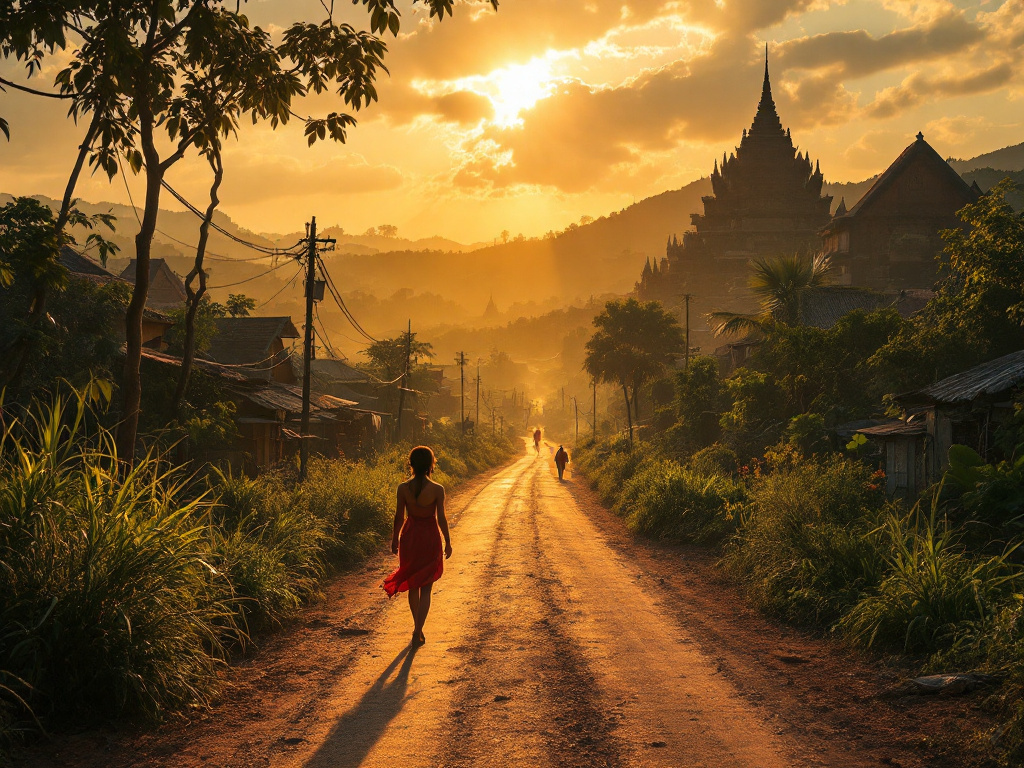
Battambang: The Cambodia That Wasn't Built for Tourists
Cambodia's second city keeps its French colonial streets, its famous circus school, and its bamboo train largely to itself — the kind of place that rewards lingering over travelers who rush.
Highlights
- Phare Ponleu Selpak circus performance under the stars
- Bamboo train rattling through green rice paddies
- Num pang with pâté at dawn on Street 1.5
- Millions of bats spiraling out of Phnom Sampeau at dusk
- Coffee and colonial architecture on the Sangker riverfront
The Experience
Most travelers to Cambodia choose between the temples of Siem Reap and the controlled chaos of Phnom Penh. Battambang exists in the space between — the country's second city, sitting along the slow Sangker River with a grid of French colonial streets so well-preserved you half expect a pastry shop to materialize on the corner. The pace here is entirely different. Tuk-tuks outnumber tour buses. The riverside market runs on its own schedule. Nothing here is performing for you.
The thing about Battambang is that it never lost the thread. When the French left their architectural mark on Cambodia, they left it most deeply here: grand villas with shuttered balconies line the waterfront, and several of them have quietly become the best cafés in the country. Locals eat breakfast at plastic tables outside the Central Market, ordering fried rice and iced coffee that comes in a knotted bag. The famously rickety bamboo train — a flat wooden platform laid on railway axles — still rattles through rice paddies on a track the government has spent years threatening to pave. It is still there. Take it anyway.
Battambang's real beating heart is Phare Ponleu Selpak — the circus school that grew from a refugee camp at the Thai border and turned a generation of kids into world-class acrobats, musicians, and visual artists. Attending a performance here is one of the more genuinely moving things you can do in Southeast Asia. The school is also an active arts campus: painters, sculptors, and printmakers work alongside the circus performers, and the compound hums with creative energy in a way that feels entirely at odds with a sleepy provincial city. The night you go to the show, Battambang feels electric.
The food is a quiet revelation. Cambodia's French-influenced bakery culture survived here in a way it did not everywhere else. Num pang — the Cambodian bánh mi, stuffed with pâté, pickled vegetables, and fresh herbs — appears at dawn on Street 1.5 from vendors who have been doing this for decades. The market stalls around Psar Nath, the Central Market under its extraordinary Art Deco dome, offer fresh coconut noodles, sugar palm cake, and the grilled beef skewers that Cambodian street food does better than almost anyone. Come evening, the riverside fills with families, and a few low-key bars serve local Angkor draft while someone's phone plays Thai pop from a distant table.
Battambang rewards being in no particular hurry. Rent a bicycle and ride out past the rice paddies to Wat Banan at sunrise. Take a late-afternoon tuk-tuk to Phnom Sampeau to watch millions of bats spiral out of the limestone caves at dusk — one of Cambodia's most spectacular and completely uncommercialized spectacles. Stay three nights. Stay four. The guesthouse owner will know your name by day two, and you will have found your café by morning.
Want a personalized itinerary for this trip?
Sign up to get AI-generated day-by-day plans tailored to your preferences.
Plan Your Itinerary