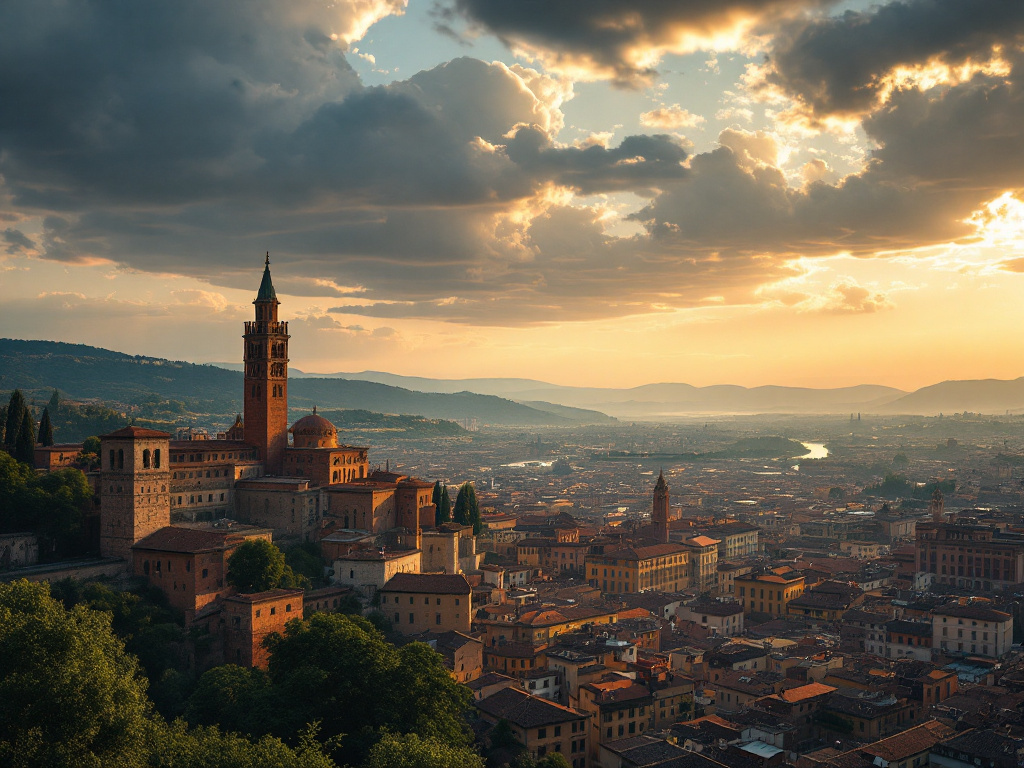
Bologna: La Grassa, La Rossa & the Italy That Feeds Itself
A long weekend in Italy's food capital and most underrated city — where medieval porticoes shelter aperitivo bars, sfogline roll pasta by hand in the Quadrilatero, and the oldest university in the world sets the city's pace.
Highlights
- Hand-rolled tortellini and mortadella in the Quadrilatero market
- Aperitivo hour under the porticoes of the university quarter
- MAST photography museum in the Bolognina
- Tagliatelle al ragù at a trattoria with no menu
- Climbing the Asinelli Tower at dusk
- Natural wine bar-hopping through the Pratello strip
The Experience
Bologna has three nicknames and earns all of them. La Grassa — The Fat — because this city cooks better than any other in Italy, and Italians will fight you on that. La Rossa — The Red — for the terracotta rooftops that give the skyline its warm, almost amber glow, but also for a century of left-leaning politics that made Bologna the only major Italian city where you could grow up a socialist and feel entirely mainstream. La Dotta — The Learned — because the University of Bologna, founded in 1088, is the oldest in the western world, and its hundred thousand students have been making this place restless and opinionated for nearly a millennium.
What Rome and Florence have in tourists, Bologna has in locals. This is not a city performing itself for visitors. The Quadrilatero market, the medieval grid of streets between Via Rizzoli and Piazza Maggiore, operates on a schedule set by the city's own appetite. Sfogline — the women who roll pasta by hand — work behind glass in deli storefronts, and the tortellini you eat at lunch was made that morning. The salumi shops are not boutiques. They are pantries that happen to have storefronts, serving the same families they have served for generations. Order mortadella anywhere else in the world and you get a pale copy. Order it here and you understand what the imitation was trying to be.
The porticoes are the secret. Bologna has 38 kilometers of covered walkways, more than any other city in the world — a UNESCO inscription that nobody who lives here references because the porticoes are simply how you move through the city. They create a kind of permanent covered street, shaded in summer and dry in winter, where the line between indoors and outdoors dissolves entirely. The aperitivo circuit runs under them every evening from six to nine, when every bar in the university quarter sets out bowls of olives and slices of mortadella and the neighborhood eats standing up for the price of a glass of wine. It is the most civilized form of dinner you have ever not quite had.
Then there is the Bolognina, the neighborhood north of the central station that was long industrial and working-class and is now the address for galleries, music venues, and the MAST foundation — a photography museum inside a repurposed industrial complex that is one of the finest spaces in Italy, and almost nobody outside the city has heard of it. Bologna has a long history as Italy's music capital, the city where the indie labels were, where the venues that mattered were, and that energy is still here if you know where to look: basement clubs and courtyard concerts and bars where the DJ setup is wedged next to the espresso machine.
This is a trip for the traveler who is done with the greatest-hits version of Italy and wants the one that actually lives here — where the best meal of your life happens at a place with four tables and no sign, where the wine is from Emilia-Romagna and the politics are loud and the city would, genuinely, be fine if you never showed up.
Want a personalized itinerary for this trip?
Sign up to get AI-generated day-by-day plans tailored to your preferences.
Plan Your Itinerary