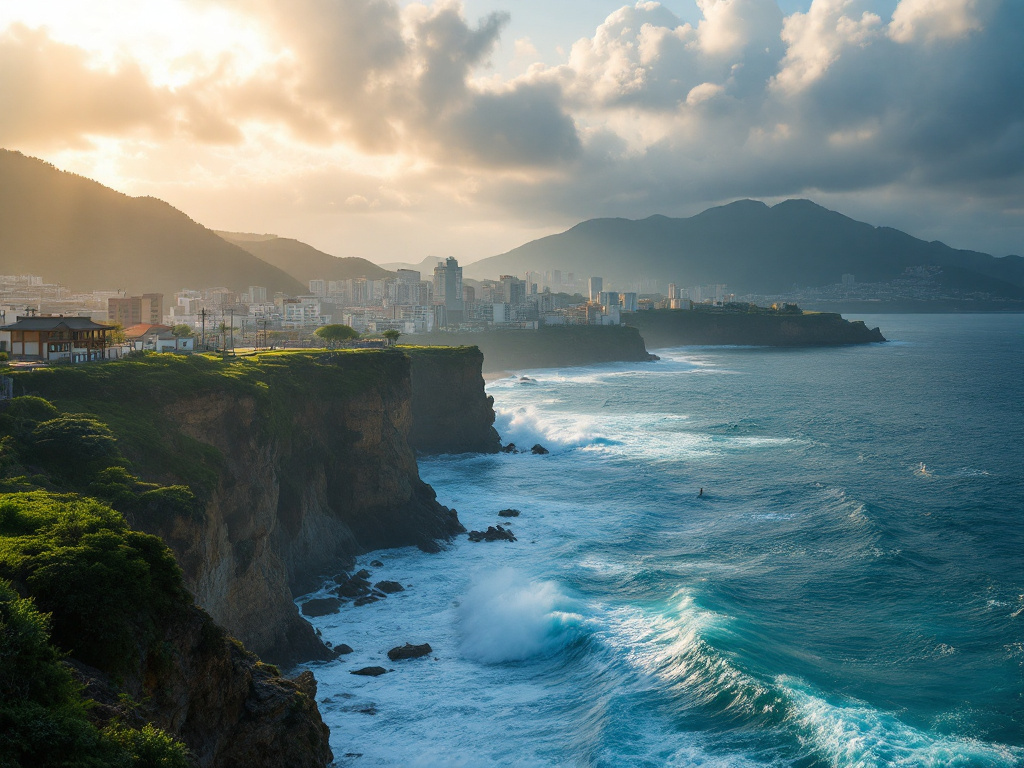
Busan: Surf, Seafood & the Korea Seoul Overlooks
Four days in Korea's salt-air second city: cliffside temples, street-art villages stacked up the hillsides, Jagalchi's raw fish stalls, and an indie coffee scene that quietly outpaces Seoul.
Highlights
- Sunrise raw fish breakfast at Jagalchi Fish Market
- The stacked pastel alleys of Gamcheon Culture Village
- Cliffside prayer halls at Haedong Yonggungsa temple
- Indie roaster crawl through Jeonpo Cafe Street
- F1963, a wire factory reborn as an art and coffee complex
- Gwangalli Beach and the bridge lights at night
- Cliff-edge cafes and ocean walk at Huinnyeoul Culture Village
The Experience
Busan has always done things its own way. Where Seoul moves with the clipped urgency of a capital, Busan loosens its collar. This is a port town first and foremost, built on fishing fleets and shipyards and the kind of blunt, salt-cured hospitality that comes from people who work the water. The dialect is rougher, the seafood is fresher, and nobody is in much of a hurry. Koreans from the north come here to exhale, and once you spend a morning watching the ajummas haggle over live octopus at Jagalchi, you understand why.
What makes Busan genuinely hip isn't manufactured. It rose out of hard history. Gamcheon Culture Village, the postcard hillside of pastel houses stacked like a Lego set above the harbor, was a refugee settlement during the Korean War before artists moved in and turned its alleys into a living gallery. Across the bay, Huinnyeoul fills a sheer cliff face with tiny homes, indie cafes and ocean views that locals guarded for years before the cameras found them. The city wears its grit and its beauty in the same breath, and it has never felt the need to choose between them.
The coast is the whole point. Haeundae gets the crowds and the high-rises, but the real pleasure is the string of quieter beaches and headlands beyond it. Surfers ride the breaks at Songjeong year-round. The cliffside walk at Igidae looks straight across the water to the skyline. At Haedong Yonggungsa, a Buddhist temple clings to the black rocks where the waves actually break against the prayer halls, which is about as far from a landlocked mountain monastery as Korean Buddhism gets. Come evening, the Gwangalli boardwalk lights up under the great suspension bridge and the whole city seems to spill out for raw fish, cold beer and soju by the sea.
Then there is the coffee, and the coffee in Busan is serious. Korea has become one of the most obsessive cafe cultures on earth, and Busan punches above its weight. The Jeonpo Cafe Street, a former industrial machine-tool district, now hides some of the country's best roasters behind unmarked steel doors. F1963, an abandoned wire factory, has been reborn as a sprawling complex of galleries, a bookstore, a bamboo grove and a coffee bar. The pattern repeats all over the city: old working spaces, reclaimed by a generation that wanted somewhere of its own to sit, talk and make things.
This is a trip for travelers who like their cities a little salty and self-possessed, who would rather slurp dwaeji gukbap at a market stall than queue for a famous Seoul restaurant, and who measure a place by its beaches, its back-alley roasters and its refusal to be polished into something it isn't. Busan gives all of that, with the ocean always in view.
Want a personalized itinerary for this trip?
Sign up to get AI-generated day-by-day plans tailored to your preferences.
Plan Your Itinerary