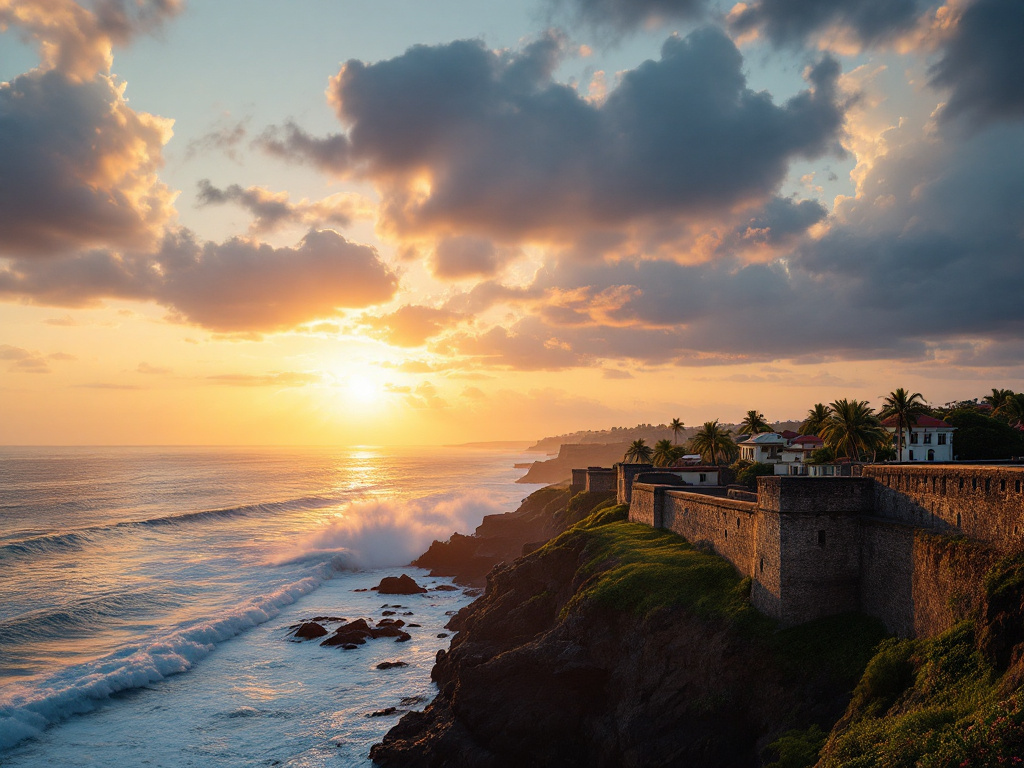
Galle Fort: Sri Lanka's Colonial Pearl on the Indian Ocean
A long weekend inside Galle's Dutch-era fort — rampart walks at sunset, rice and curry lunches in converted mansions, and the south coast's best surf and spice just beyond the walls.
Highlights
- Rampart walk at sunset over the Indian Ocean
- Rice and curry lunch on Pedlar Street
- Watching cricket on the historic Galle Oval
- Surf lessons at Weligama beach
- Gem shopping on Church Street
The Experience
The fort announces itself slowly — a lighthouse, then rampart walls the color of old bone, then the Indian Ocean stretching out behind everything like it's been there longer than the town that grew up around it. Galle Fort is one of those rare places where the colonial past and the present Sri Lankan reality haven't been sorted into separate zones. Dutch-era mansions house boutique hotels, but the corner shops are still corner shops and the muezzin still calls from the mosque that has occupied the same street corner for centuries. It doesn't feel preserved so much as simply continuous.
Walking the ramparts at dusk might be the finest free activity in South Asia. The walls make a full circuit around the tip of the peninsula, and from the top you get the town's red-tiled rooftops on one side and the ocean breaking sixty feet below on the other. By four in the afternoon the local cricket players claim the oval at the fort's center — a pitch that is technically one of the most historically layered sports grounds in the world, which nobody here particularly cares about, because they are just playing cricket.
The food is the other reason to come. Sri Lankan cooking in Galle carries everything that passed through this port across centuries — cinnamon (the island's own), pepper, cardamom, the Dutch dairy tradition that survived in lamprais, the Tamil influence that makes the hoppers and kottu roti street food here distinct from Colombo's. The better restaurants aren't translating Sri Lankan cuisine for outside audiences; they're cooking what they cook. The rice and curry lunch spots on Pedlar Street, where you point at what you want from a line of clay pots, are as good as anything in the fort's linen-tablecloth options and a fraction of the price.
Galle orients you toward the south coast, which is worth understanding as context rather than scheduling pressure. Weligama is forty minutes east with some of the most beginner-friendly surf in the country. Mirissa, known for whale watching (and now known-too-well for that), is nearby if you plan around the crowds. But Galle Fort itself rewards people who stay inside the walls: the gem dealers on Church Street, the afternoon light hitting the lighthouse, the slow loop along the ramparts before the sun drops behind the horizon.
The best time to come is December through March, when the southwest coast sits in the dry side of the monsoon and the Indian Ocean is flat and turquoise. The town has become more visited in recent years — boutique hotels multiplied after the 2010s, Airbnb arrived — but the fort hasn't tipped. The ratio of travelers who are genuinely there versus those passing through on a two-week Sri Lanka circuit still favors the former. Come now, while that holds.
Want a personalized itinerary for this trip?
Sign up to get AI-generated day-by-day plans tailored to your preferences.
Plan Your Itinerary