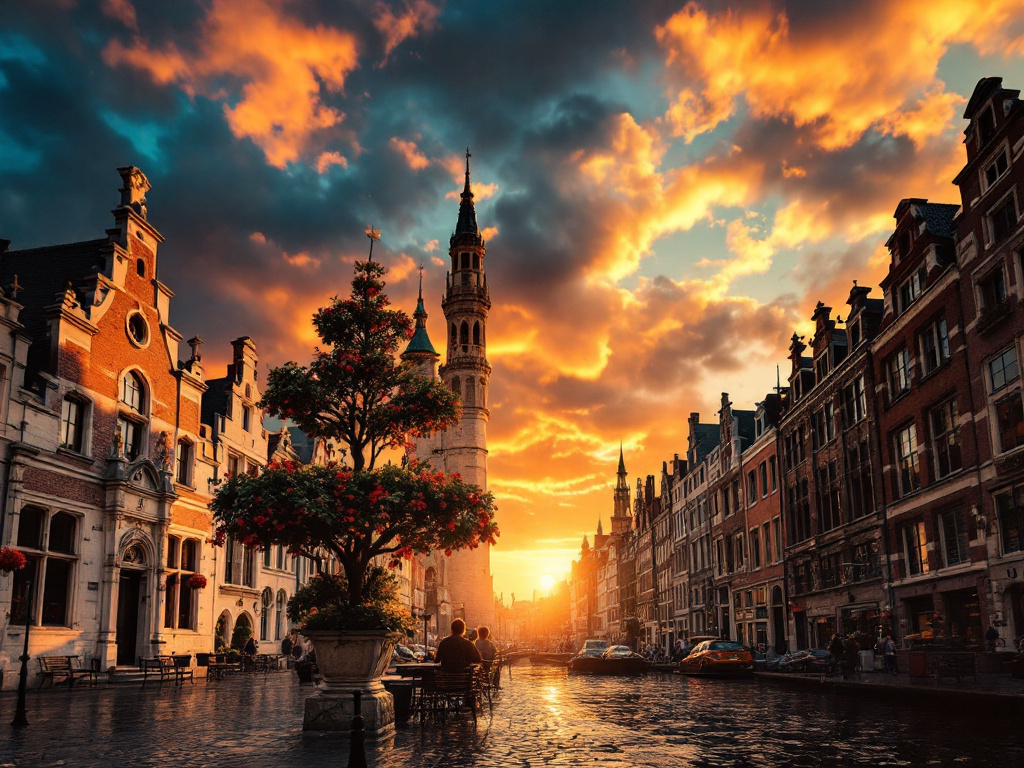
Ghent Unlocked: Beer, Art & the Anti-Bruges
Belgium's most liveable city rewards curious travellers who skip Bruges: medieval canals without the crowds, a world-class altarpiece, craft beer culture rooted in the city itself, and a Patershol neighbourhood that still belongs to its residents.
Highlights
- The Ghent Altarpiece at Sint-Baafskathedraal
- Evening drinks on the Graslei quay
- Gruut amber brewed with herbs instead of hops
- Dinner in a decades-old Patershol restaurant
- Werregarenstraat street art alley
The Experience
Ghent has a standing joke about Bruges: that Bruges is what Ghent could have become if it had simply stopped trying. It's meant affectionately, but there's real pride underneath it. Ghent kept its university, kept its politics, kept its industries and its arguments. The result is a medieval city that never fossilised — one where the guildhalls along the Graslei still make a jaw-dropping backdrop, but where the people sitting in front of them at dusk are students, architects and families from the Patershol who walked ten minutes to get there.
The Patershol is the neighbourhood that Ghent residents point to when they want to explain what their city is. Narrow cobbled lanes behind the castle of the Counts, lined with restaurants that have been in the same hands for decades — no sandwich boards, no English menus pushed at the door. Saturday morning at the Vrijdagmarkt feels the same way: a genuine working market with stalls of secondhand books, hardware, and local cheese, not a photogenic souvenir operation.
Ghent brews its own beer and is unapologetic about preferring it. Gruut, brewed with a proprietary blend of herbs rather than hops, is available almost nowhere else in the world. The Dulle Griet serves its famous Kwak in the traditional vessel — wooden shoe and all — with a refundable deposit on a shoe. These aren't tourist gimmicks; they predate the tourist industry by several centuries.
The Ghent Altarpiece in Sint-Baafskathedraal is worth a separate conversation entirely. Jan van Eyck completed it in 1432 and it has been called the most influential painting in Western art history — stolen by Napoleon, stolen again by the Nazis, returned after the war with missing panels only recently recovered. Seeing it in its restored state, in the chapel it was built for, is one of those travel experiences that resets your sense of scale.
Ghent suits people who want a city that hasn't made itself smaller to be easier to visit. It's the kind of place where a good afternoon is built from a coffee at Labath, a walk through the Werregarenstraat street art alley, and a long dinner in the Patershol — and where those three things feel genuinely earned rather than scheduled.
Want a personalized itinerary for this trip?
Sign up to get AI-generated day-by-day plans tailored to your preferences.
Plan Your Itinerary