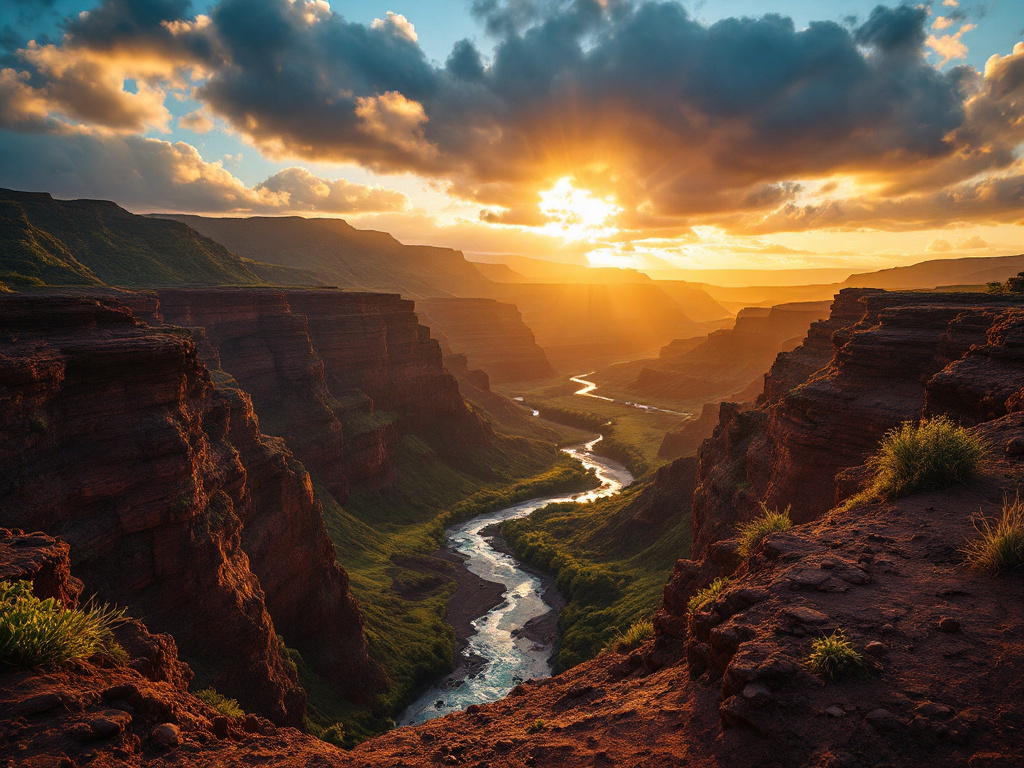
Kauai's West Side: Waimea Canyon, Art Nights & the Edge of Nowhere
Red-dirt canyon overlooks, a one-street art town that comes alive on Fridays, and a 17-mile beach with no lifeguards and no crowd.
Highlights
- Waimea Canyon's red-rock overlooks, the 'Grand Canyon of the Pacific'
- Hanapepe's Friday Art Night on the swinging pedestrian bridge
- Waimea town's Captain Cook landing site and plantation-era storefronts
- Polihale's untouched, unpatrolled 17-mile beach
The Experience
The west side is drier, redder, and quieter than the rest of Kauai, and that's exactly the point. The trade-wind clouds that soak Hanalei rarely make it this far, so the light is sharper and the canyon walls actually show their color. Waimea Canyon — a 3,000-foot gash of rust and green that Mark Twain's contemporaries started calling the Grand Canyon of the Pacific, and the name has stuck for good reason — opens up in stages as the road climbs, with pullouts that get better the higher you go, until Kōkeʻe State Park hands you swamp trails, cool mountain air, and views clear across to Niʻihau on a good day.
Down at sea level, Hanapepe does more with one street than most towns manage with ten. It bills itself, only half-jokingly, as Kauai's biggest little town, and on Friday nights the galleries throw their doors open, musicians set up on the sidewalk, and the swinging pedestrian bridge over the Hanapepe River fills with people who've been coming to Art Night for twenty years next to people who just found out it exists. By day it's a scatter of plantation-era storefronts, taro chip shops, and painters who actually live above their studios — nothing here is styled for a cruise-ship crowd, because the cruise ships don't stop.
Keep driving west past Waimea town — where a monument marks the spot Captain Cook first set foot in Hawaii in 1778 — and the pavement eventually gives out at Polihale, a 17-mile stretch of dune and shoreline with no lifeguards, no facilities, and often nobody else on it at all. The sand road in requires care and a car you're not too precious about, but sunset here, with the silhouette of Niʻihau offshore, is the kind of empty-beach payoff that the rest of the island stopped being able to offer once it got popular.
This side suits hikers who want real elevation change, plantation-history buffs, photographers chasing canyon light, and anyone whose idea of a good Friday night is a folk trio on a swinging bridge rather than a resort luau.
Want a personalized itinerary for this trip?
Sign up to get AI-generated day-by-day plans tailored to your preferences.
Plan Your Itinerary