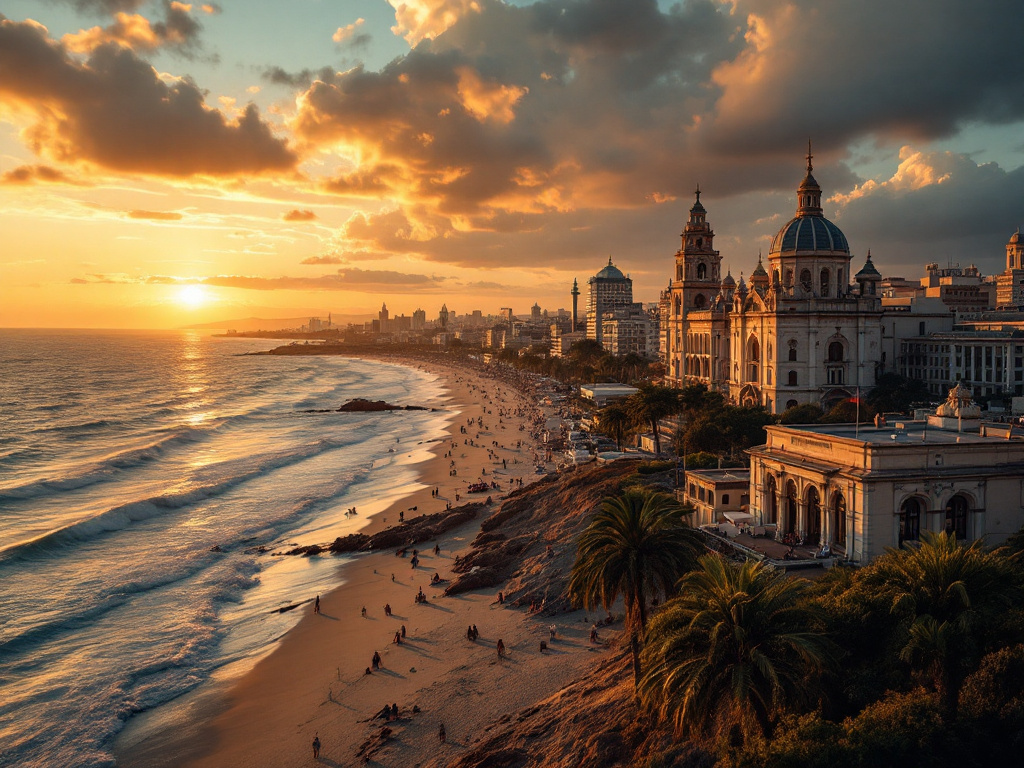
Montevideo: The Capital That Never Tried to Impress You
A long weekend in Uruguay's elegant, unhurried capital — where Art Deco facades shelter old-school confiterías, Mercado del Puerto fills with asado smoke on Saturday mornings, and the rambla carries you 22 kilometers along the Río de la Plata before you've had your second mate.
Highlights
- Asado smoke and Tannat wine at Mercado del Puerto on Saturday morning
- The 22-kilometer rambla walk at sunset with a mate thermos
- Feria Tristán Narvaja Sunday market in Barrio Goes
- Art Deco facades and century-old confiterías in Ciudad Vieja
- Candombe drumming spilling out of Barrio Sur on a Thursday night
- A chivito sandwich from a corner bar that does not have a logo
The Experience
Montevideo tends to arrive in the shadow of Buenos Aires — the two capitals face each other across the Río de la Plata, close enough that you can take the ferry in under two hours — and that shadow is the best thing that ever happened to it. The pressure to perform never arrived here. The restaurants don't need to be trendy because the locals wouldn't care if they were. The architecture is magnificent without anyone having announced it. The Sunday feria at Tristán Narvaja stretches for half a mile through Barrio Goes and sells everything from vintage furniture to hand-lettered religious tracts to the kind of perfect chivito sandwich that no one in the stalls is particularly fussed about making famous.
The Ciudad Vieja is the neighborhood that carries the city's visual argument most forcefully. It runs along a peninsula between the old port and the Bahía, and its grid of streets contains one of the most intact collections of Art Deco and neocolonial architecture in South America — buildings like Palacio Salvo, which was the tallest in South America for a decade and still looks like it was designed by someone who wanted to remind the continent what ambition looked like before the accountants arrived. The plazas move at a pace set by retired men playing chess and mothers pushing prams along the paseos, and the confiterías — the old-school café-restaurants that somehow survived every economic crisis — still serve café con leche in glass cups at tables that have been there since the 1940s.
Mercado del Puerto is where the city eats fire on Saturday mornings. The nineteenth-century iron market hall has been given over entirely to parrilladas — the open-wood-fire grills that are Uruguay's primary art form — and the smoke that drifts through it carries the concentrated argument for why Uruguayan beef occupies a category of its own. This is not a tourist market dressed up as a local one. The asadores who work the grills have been doing it for decades, the cuts are priced for regulars, and the wine is Tannat from the Canelones region, served without ceremony. You sit elbow-to-elbow with strangers and eat slowly and do not particularly want to leave.
Then there is the rambla, the 22-kilometer waterfront promenade that runs uninterrupted from the Ciudad Vieja out past Pocitos and Carrasco. No other capital in the Americas has anything like it — a continuous public strand along an inland sea where the entire city, on any given evening, walks, sits on the seawall with mate thermoses, or simply watches the river go pink in the last hour of light. The barrios change as you move: Barrio Sur, with its murga tradition and African-descended candombe rhythms that spill out of practice spaces on Thursday nights; Parque Rodó, where weekend outdoor theater happens; Pocitos, where corner bars stock Uruguayan craft gin alongside the standard Pilsen. Each neighborhood is a different piece of the same unhurried argument.
This trip is for the traveler who has seen Buenos Aires and wants to understand what the Southern Cone looks like when it is not trying to be Paris. Montevideo is smaller, more legible, and far more willing to let you find it on its own terms — which turn out to be very good terms: excellent food, serious wine, art that asks questions without announcing itself, and a waterfront that rewards an entire afternoon of doing nothing in particular.
Want a personalized itinerary for this trip?
Sign up to get AI-generated day-by-day plans tailored to your preferences.
Plan Your Itinerary