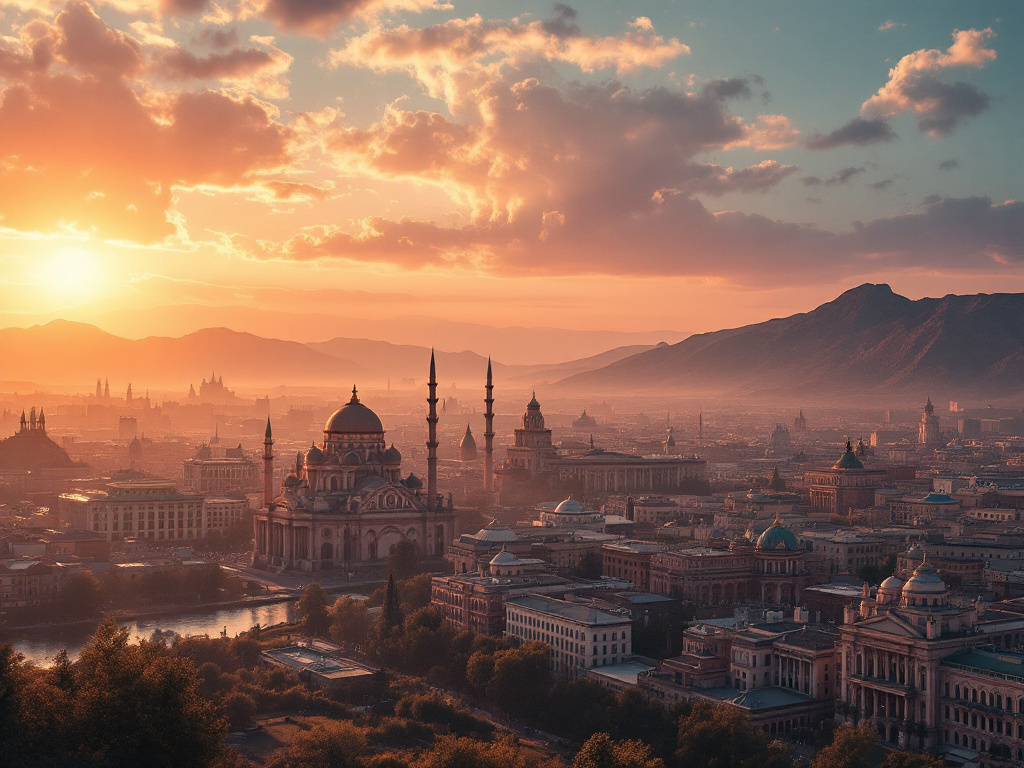
Pink City, Deep Time: A Long Weekend in Yerevan
Armenia's rose-toned capital blends Soviet-era grandeur with 6,000 years of winemaking heritage and a café scene that gives third-wave cities a run for their money.
Highlights
- Sunset over Mount Ararat from the Cascade terrace
- Areni Noir wine tasting in Vayots Dzor gorge
- Khorovats ritual at a family-run courtyard restaurant
- Cafesjian Center for the Arts inside the Cascade staircase
- Lavash baked fresh from a tonir oven
- Ararat Brandy distillery tour
The Experience
Yerevan is built from tufa, the volcanic stone that bleeds from salmon pink at dawn to deep rose at dusk, giving the city an almost geological presence you can't shake. Walk Republic Square in the early evening when the fountains dance to folk music and the stone facades catch the last light, and you'll understand immediately why Armenians call this place the Pink City. It is ancient and earnest and surprisingly cosmopolitan — a capital that knows where it came from and isn't in a hurry to pretend otherwise.
The city's café culture is genuinely world-class, which surprises most visitors expecting a former Soviet backwater. Yerevan's coffee scene is third-wave serious: baristas who've competed in international championships, single-origin pours from nearby growing regions, interiors that split the difference between Soviet brutalism and Copenhagen minimalism. The scene clusters around the northern avenues and the Cascade district, where a good afternoon can disappear entirely in a corner booth with a proper flat white and an Areni wine to follow.
Armenian food rewards lingering. Lavash emerges from the tonir oven hot and translucent enough to read through; dolma is wrapped tight in vine leaves and steamed until the lamb inside turns falling-soft; khorovats — the Armenian barbecue — is a serious ritual involving whole shoulders of lamb over open coals in the courtyards of family restaurants that have been doing exactly this for three generations. Do not skip the wine. Armenia is one of the oldest wine-producing regions on earth: Areni Noir, grown south of the city in the gorges of Vayots Dzor, is the grape of a 6,000-year-old winery and it tastes like it remembers everything.
The Cascade is Yerevan's best paradox: a Soviet-era monumental staircase that now houses the Cafesjian Center for the Arts, one of the most underrated contemporary art collections in the world. Botero bronzes anchor the base. Escalators run inside through installation galleries. The view from the top takes in Mount Ararat — the sacred mountain that sits just across the border in Turkey, visible from almost everywhere in the city, a looming and complicated presence. The History Museum of Armenia on Republic Square is worth half a day, particularly the Urartian collection: bronze work and armor from a civilization that predates Greece and feels like something science fiction conjured.
Yerevan suits travelers who travel to eat and drink seriously, who want to feel genuinely off-trail in a place with real depth, and who don't need a beach to have a good time. Prices are a fraction of Western Europe. Locals are forthcoming in the way that comes from a culture that treats hospitality as a genuine value rather than a tourist amenity. The brandy is extraordinary — Ararat has been producing it since 1887 — and evenings on the Cascade terraces in September, with the mountain lit from below and wine cheap enough to order without checking the price, have a quality that's hard to convey without sounding like you're overselling it.
Want a personalized itinerary for this trip?
Sign up to get AI-generated day-by-day plans tailored to your preferences.
Plan Your Itinerary