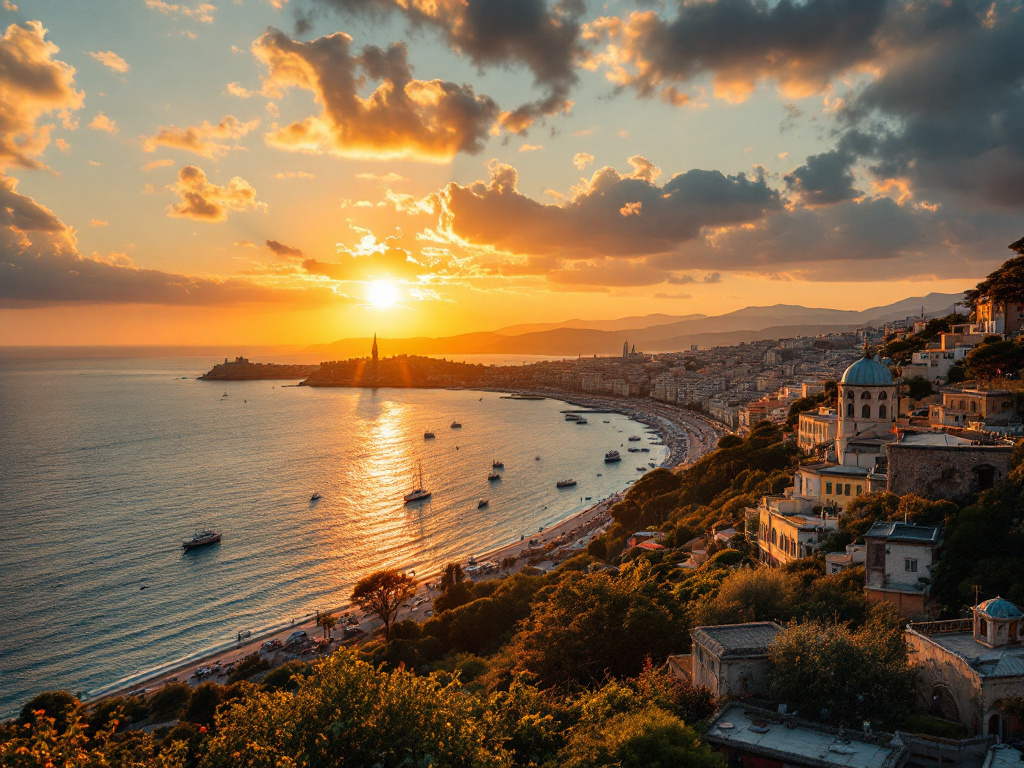
Smyrna Reborn: Izmir's Kordon, Markets & the Turkey That Faces West
A long weekend in Turkey's most effortlessly cool city — waterfront promenades, Roman ruins, a sprawling Ottoman bazaar, and an Aegean food culture that makes the rest of the country look like it's trying too hard.
Highlights
- Sunrise boyoz and tea at a Kemeraltı bakery
- Wandering the Roman agora in the middle of the city
- Kumru sandwiches at the Kordon waterfront
- Alsancak rooftop bars as the Aegean sun drops
- Kemeraltı Bazaar's spice lane and second-hand bookshops
The Experience
Izmir doesn't posture. While Istanbul performs its greatest-city-on-earth routine for the hundredth time, Turkey's third-largest city sits on its Aegean bay eating very good fish, drinking very good coffee, and letting the afternoon light do whatever it wants. The Kordon — a long palm-lined waterfront promenade — is where you'll find the city's true character: old men playing tavla, young couples eating kumru sandwiches, and the kind of easy, unhurried energy that coastal cities either have or they don't. Izmir has it in abundance.
The city runs on a useful tension between its two main neighborhoods. Alsancak is the progressive, bar-filled district where art galleries share walls with natural wine spots and rooftop cocktail bars fill up well before midnight. A short walk or tram ride away, Kemeraltı is one of Turkey's great working bazaars — not a tourist market but a living one, where spice merchants and second-hand booksellers and boyoz bakeries operate exactly as they have for centuries. Between them you'll find the Roman agora, a surprisingly intact set of marble columns sitting in an open-air excavation in the middle of the city, as if history just left it there for you to find.
The food here has its own distinct logic, shaped by Aegean ingredients, Sephardic Jewish heritage, and a long history of Mediterranean trade. Boyoz — a flaky, sesame-dusted pastry originally brought by Ottoman-era Sephardic immigrants — is the definitive Izmir breakfast, best eaten warm with a hard-boiled egg and a glass of tea so strong it almost chews back. By noon the kumrucus are busy: the kumru is a toasted sesame bun loaded with sausage, cheese, and tomato, a street food so specific to Izmir that locals take it as a point of civic pride. Dinner is mezze and whatever came off the boat that morning, eaten slowly with rakı.
The historical layers here are genuinely strange and moving. Smyrna — Izmir's ancient Greek name — was one of the Mediterranean's great cosmopolitan trading cities, home to Greeks, Armenians, Levantine Europeans, and Sephardic Jews alongside Turks and Ottomans. The city burned catastrophically in 1922 and was rebuilt, which is why modern Izmir feels like a Mediterranean city wearing Ottoman clothes wearing Roman shoes — each layer visible if you know where to look. The archaeology museum holds remarkable finds from across the Aegean. Kadifekale, the ancient hilltop citadel, gives you the full picture: city, bay, islands, horizon.
Izmir suits travelers who want a city that functions as a place rather than a performance. It has world-class food without the three-month restaurant reservation. It has nightlife that doesn't require you to know anyone. It has history that doesn't rope you off from it. And it has the Aegean light, which is its own category entirely — that particular quality of afternoon gold that makes every café terrace feel like you arrived at exactly the right moment.
Want a personalized itinerary for this trip?
Sign up to get AI-generated day-by-day plans tailored to your preferences.
Plan Your Itinerary