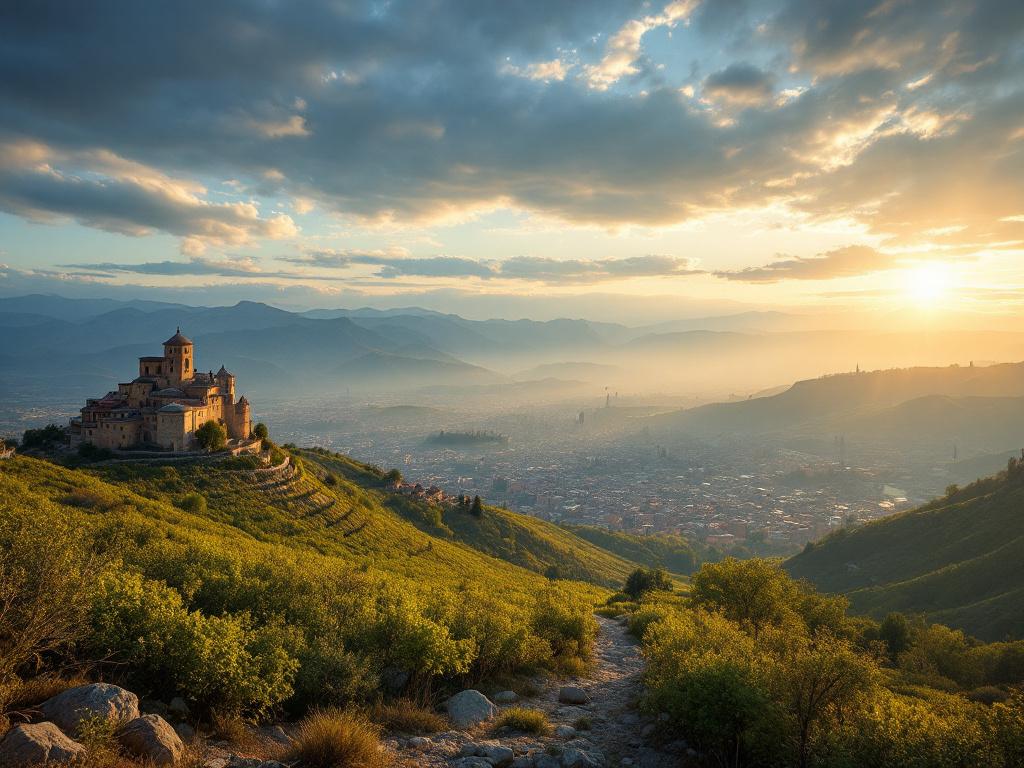
Tbilisi: Ancient City, Natural Wine & the Caucasus
Georgia's capital has been continuously inhabited for 1,500 years, sits where Europe ends and Asia begins, and produces some of the world's most interesting wine in clay vessels buried in the earth. It's also one of the most hospitable places on the planet.
Highlights
- Sulfur bath soak in Abanotubani district
- Natural wine at Vino Underground
- Khinkali at a neighborhood dumplings house
- Kakheti wine region day trip
The Experience
Tbilisi is the kind of city that requires adjustment. The old town — Kala — piles up into the cliffs above the Mtkvari River: pastel-painted wooden balconies cantilevered over cobblestone lanes, sulfur baths steaming from below, Georgian Orthodox churches alongside Persian mosques alongside a 19th-century synagogue, all within a few hundred meters. The cable car to Narikala fortress delivers the skyline view, but the real reward is walking down through the neighborhood, stopping when something looks interesting, which is constantly.
Georgia's natural wine movement isn't a trend — it's 8,000 years of continuous amber wine tradition practiced in qvevri, large clay vessels buried underground for fermentation. The city has built an extraordinary wine bar scene around this: places like Vino Underground, Wine Factory 1, and the neighborhood bars in Fabrika will serve you skin-contact Rkatsiteli and Kisi from producers you've never heard of, at prices that feel wrong. Wine tourism into Kakheti (the main wine region, two hours east) is straightforward and spectacular.
The food is its own reason to come. Khinkali (soup dumplings, eaten by hand, never cut) from any neighborhood dumplings house; khachapuri Adjaruli (the boat-shaped bread filled with molten cheese and a raw egg, broken apart at the table); churchkhela (walnuts threaded on a string and dipped in grape juice until they become something like candy). The old Dezerter Bazaar is where you see the actual food supply chain, buy churchkhela from a grandmother, and drink coffee standing at a counter that hasn't changed in forty years.
Georgians operate by the rule of hospitality that has its own word — mgzneoba — and the net effect is that strangers invite you for a tamada (the ritual toasting tradition at a feast called a supra) and mean it. Come ready to say yes.
Want a personalized itinerary for this trip?
Sign up to get AI-generated day-by-day plans tailored to your preferences.
Plan Your Itinerary