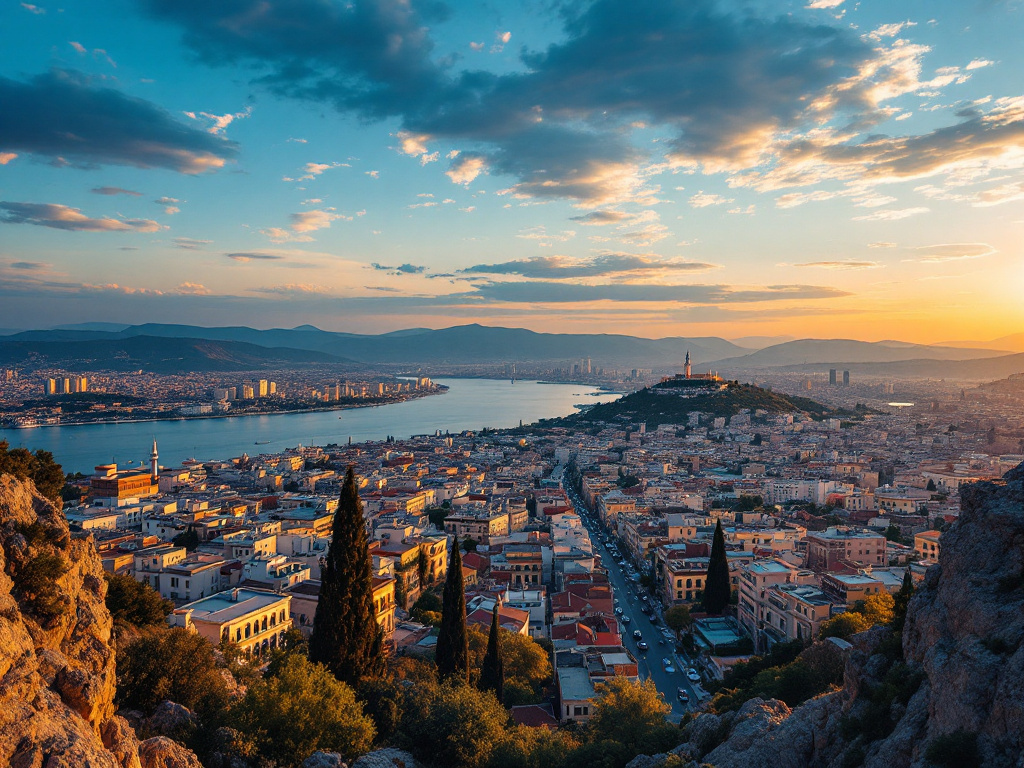
Thessaloniki: Greece's Northern Soul
Four days in Greece's second city — where the food is better than Athens, the history is older than you think, and nobody is performing for tourists.
Highlights
- Bougatsa at dawn from a decades-old pastry shop near the Bezesteni
- Museum of Byzantine Culture — one of the finest museums in Greece
- Sunset from the Byzantine walls above the Trigonion Tower
- Ladadika district bar-crawl through the old olive oil warehouses
- Valaoritou Street jazz bars and the city's underground music scene
- Fresh seafood and mezze at the covered Modiano market
The Experience
Athens gets the postcards. Thessaloniki gets the food. This is not a small distinction — in Greece, where eating is essentially a civic religion, being known as the place that cooks better than the capital is a status that carries enormous local pride and almost zero international recognition. That gap is exactly what makes this city worth visiting.
Thessaloniki is the second-largest city in Greece and the capital of Macedonia, a region with a complicated history that the city wears openly: Roman triumphal arches sit embedded in sidewalks, Byzantine churches occupy every other corner, and the Ottoman-era covered bazaar — the Bezesteni — still operates as a functioning market, selling carpets and copper pots the way it has for five centuries. The White Tower on the waterfront is the city's unofficial mascot, a sixteenth-century Ottoman defensive fort that later became a prison and is now a museum, which tells you everything you need to know about how much history this city has lived through without making a fuss about it.
The food is the reason to come first, and the reason you will want to return. Thessaloniki has a specific taxonomy: bougatsa (warm custard pastry with a dusting of cinnamon and powdered sugar, eaten at dawn from a shop that has made nothing else for decades), gyros made on vertical spits that bear no resemblance to what gets sold under that name elsewhere, koulouri rings from carts near the port, fresh seafood at the covered Modiano market, and a mezze culture with more Ottoman depth than Hellenic lightness — a reminder that this was one of the great cosmopolitan crossroads of the Balkans before the twentieth century rearranged everything. Ladadika — once the city's olive oil warehouse district, now its main nightlife quarter — distills the city's sensibility into a few narrow streets of bars and restaurants where the cooking still feels regional rather than touristic.
What holds all this together is the Nea Paralia, the long renovated promenade running along the waterfront from the White Tower out toward the Concert Hall and beyond. Locals use it the way other cities use a main square: for walking, sitting in folding chairs with a coffee at any hour, watching the light on the Thermaic Gulf go orange then pink then gone. Above the commercial center, the Ano Poli — the Upper Town — preserves Ottoman-era wooden houses, Byzantine walls, and the Trigonion Tower, which offers a view of the city and the water that nobody has yet built a platform to monetize.
The music is the other thing. Thessaloniki has an underground that Athenians regard with careful respect: jazz bars on Valaoritou Street, rebetiko clubs in converted basements where a form born partly in this city is still played by people who take it seriously, and a general density of live music that reflects a student population — Aristotle University enrolls around seventy thousand — that has strong opinions about what it wants to hear on a Thursday night. Come for the bougatsa. Stay for what comes after.
Want a personalized itinerary for this trip?
Sign up to get AI-generated day-by-day plans tailored to your preferences.
Plan Your Itinerary