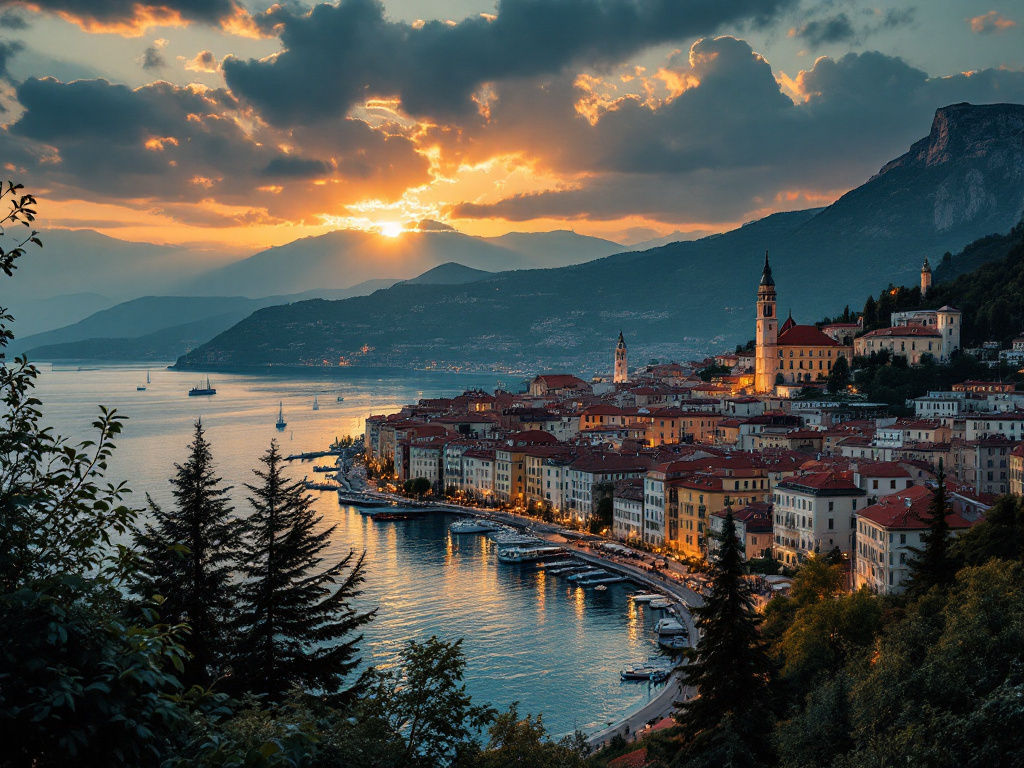
Trieste: Italy's Mitteleuropean Edge
The Italian city that feels like Vienna slid into the Adriatic — Habsburg grandeur, the most serious coffee culture in the country, Carso plateau wines, and almost no tourists.
Highlights
- Capo in a glass at a caffè storico on Piazza Unità d'Italia
- Baccalà alla triestina and Terrano wine in the old city
- Miramare Castle on its Adriatic promontory
- Osmizza farmhouse lunch on the Carso plateau
- Revoltella Museum rooftop at golden hour
- Grotta Gigante — one of the world's largest accessible caves
- Aperitivo with Collio whites in the university quarter
The Experience
Trieste is not quite Italy. That is not an insult — it is the whole point. For four centuries this was the Habsburg Empire's only sea port, the gateway between Central Europe and the Mediterranean, a city of Austro-Hungarian monuments, Slovenian surnames, Greek Orthodox domes, and a waterfront piazza so large and so open to the sea that it feels more like a stage set than a real square. The Piazza Unità d'Italia is the only major piazza in Italy that faces the water, and standing at its edge at dusk, with the bora wind coming off the Carso plateau, you understand immediately that this is somewhere that developed its own distinct character and has no intention of giving it up.
The coffee is the first proof. Trieste invented the vocabulary that the rest of the world fumbled into cappuccinos and macchiatos. Here you order a capo — a shot of espresso lightened with a touch of milk foam, served in a glass — and you drink it standing at the bar the way it was always meant to be drunk. The caffè storico tradition runs deep: Caffè degli Specchi on Piazza Unità has been operating since 1839, and the third-wave roasters who have opened in the last decade treat it as a benchmark to measure against, not a relic to replace. James Joyce lived here for eleven years, writing and teaching English and drinking at bars that are still standing. He was not in exile here so much as in his element — Trieste was then, as now, a city with its own literary culture and its own internal arguments and a comfortable indifference to what the rest of Europe thought of it.
The hills above the city are the Carso, a limestone plateau shared with Slovenia, and the wine that comes off them — Terrano, made from a grape that grows almost nowhere else, sharp and mineral and stained deep red — is the natural companion to the city's food. Triestine cuisine is a meeting point, which is another way of saying it is two or three cuisines arguing pleasantly in the same kitchen: baccalà alla triestina, slow-cooked salt cod that came in from the Adriatic trade routes; jota, a sauerkraut and bean soup that owes everything to Central Europe; prosciutto di San Daniele from up the road in Friuli, sliced to order at a pace that refuses to be hurried. The osmizze, seasonal farmhouses on the Carso that open their doors a few times a year to sell house wine and cured meat directly to whoever shows up, are among the best meals you will eat anywhere in Italy — and you will find them only if you look for them.
This is a city that rewards the traveler who is done with the obvious version of Italy. Trieste does not have a Colosseum or a Uffizi. It has the MIRAMARE Castle on its coastal promontory, built by an archduke who was shot in Mexico and never returned. It has the Revoltella Museum, a baronial palazzo turned contemporary art space with a rooftop terrace over the Gulf of Trieste. It has the Grotta Gigante, one of the largest accessible caves in the world, fifteen minutes by bus into the Carso. And it has an aperitivo hour — Rebula and Malvasia from Collio, Terrano from the plateau, Aperol if you insist — that takes place at the bar counters of the old city at exactly the hour when the light on the piazza turns gold and the sea goes flat and still. You do not have to explain why you came here. It explains itself.
Want a personalized itinerary for this trip?
Sign up to get AI-generated day-by-day plans tailored to your preferences.
Plan Your Itinerary