Amman: Limestone, Dark Coffee & the Middle East's Best Mezze
A four-day immersion in Jordan's capital: third-wave cafes on Rainbow Street, falafel that has been feeding prime ministers and taxi drivers since the 1950s, Roman ruins you walk through rather than past, and rooftop bars that run until the birds start.
Highlights
- Third-wave espresso at Societe on Rainbow Street
- Falafel and hummus breakfast at Hashem Restaurant downtown
- Roman Theatre and Citadel in a single golden afternoon
- Slow-cooked mansaf at Sufra in a restored Jabal Amman villa
- Knafeh at Habibah Sweets, Jordan's most beloved pastry counter
The Experience
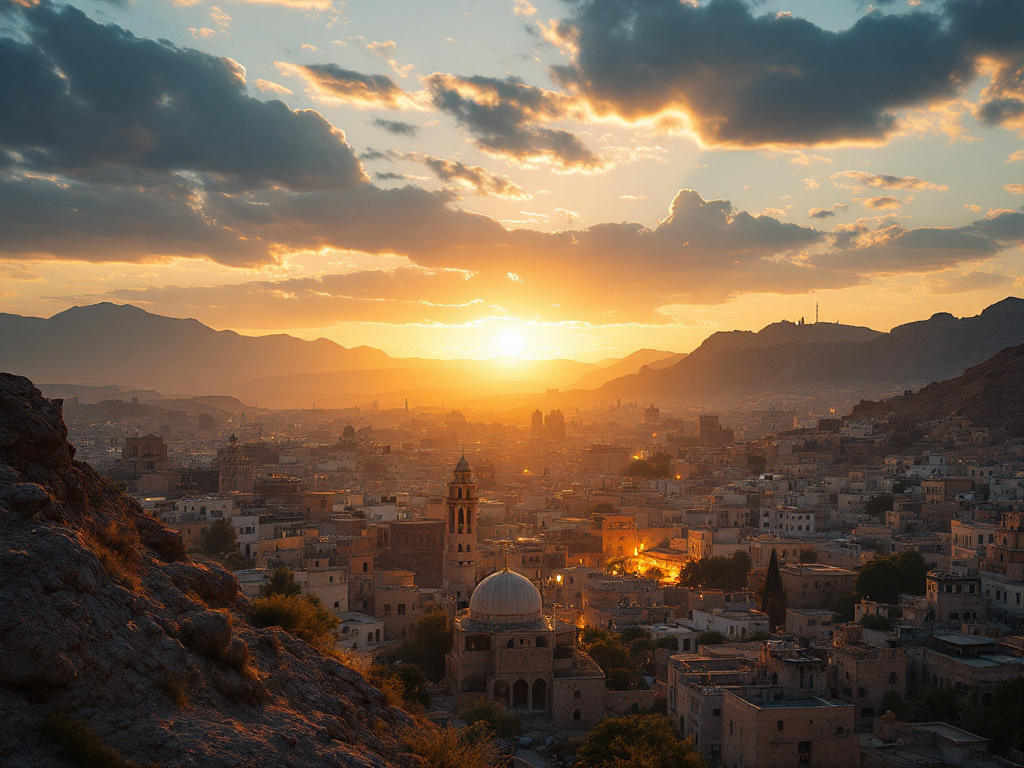
Amman doesn't advertise itself. There's no iconic skyline, no single monument that ends up on every travel poster. What there is instead is a city draped across seven limestone hills, all built from the same warm stone the Romans quarried for their downtown amphitheater, that Ottoman merchants used for their hilltop mansions, and that a new generation of architects and restaurateurs is still cutting from the same deposits today. The city has always matched its materials to its geography. Everything is the color of the land it stands on.
That color — limestone gold in the afternoon, honey at dusk — is everywhere on Rainbow Street, which is to Amman what Shoreditch was to London before the rents arrived. Third-wave coffee culture took hold here earlier than almost anywhere else in the region. Societe, Wild Jordan, and a dozen others have turned the espresso bar into an intellectual institution, the place you go when you need to argue about film, architecture, or what's happening three borders over. Laptops open, the sweet smoke of the nargileh drifting through open windows, a thick cardamom-laced Arabic coffee arriving in a small cup that nobody pretends to drink quickly.
The food is the real reason to come. Jordanian mezze is not the apologetic starter platter of international Middle Eastern restaurants. It's a full argument: smoky mutabal kissed with pomegranate, hummus so silky it will permanently adjust your standards, kubbeh that was fried that morning, mansaf slow-cooked in jameed fermented yogurt for anyone who means business. At Sufra, tucked into a restored old house in Jabal Amman, the cooking feels like a civic act. At Hashem, the legendary falafel counter at the bottom of downtown, a Jordanian king and a construction worker take the same plastic chair, eat the same thing, and pay the same price. It has worked this way since the 1950s and shows no signs of stopping.
The Roman Theatre sits at the foot of downtown, still massive enough to stop you mid-stride. The old city has simply grown around it the way old cities do: indifferently, practically, without sentimentality. Walk uphill past souks selling dried figs and discount phone cases to the Citadel on top of Jabal al-Qala'a and you're standing in the layered footprint of a Bronze Age fortress, a Roman temple of Hercules, a Byzantine basilica, and an Umayyad palace. A single afternoon covers four civilizations and about three thousand years. The light at the top, especially in the late afternoon when the city beneath turns amber, is unreasonably good.
Western Amman, spreading through the neighborhoods of Abdoun, Sweifieh, and beyond, has evolved into a different city entirely: independent bookshops, small galleries showing regional artists, rooftop terraces that fill up around 10pm and stay warm until well past midnight. For all its historical weight, Amman stays low-pressure. The salesmanship is gentle, the curiosity is genuine, and the city has a talent for producing conversations that run far longer than you planned.
Want a personalized itinerary for this trip?
Sign up to get AI-generated day-by-day plans tailored to your preferences.
Plan Your Itinerary