Below Canal: Bywater, Marigny & the Real New Orleans
Skip the French Quarter crowds for the shotgun-house neighborhoods where New Orleans actually lives: brass bands on Frenchmen Street, gallery-hopping in the Bywater, and po-boys at counters where the cooks know your order.
Highlights
- Live brass and jazz on Frenchmen Street, no cover, no tour group
- Shotgun-house gallery hopping through the Bywater Arts District
- Sunset over the Mississippi from Crescent Park's Piety Street bridge
- Second line brass bands on a Sunday afternoon
- Po-boys and red beans at neighborhood counters the locals actually use
The Experience
Cross Elysian Fields going east and the French Quarter's souvenir shops and hurricane-glass bars fall away fast. What's left is Faubourg Marigny sliding into Bywater: a run of candy-colored shotgun houses, corner bars with no sign out front, and a soundtrack that never quite stops. This is the New Orleans locals actually live in, and it rewards people willing to wander a few blocks off the obvious path more than any itinerary built around Bourbon Street ever could.
Frenchmen Street is the connective tissue between the two neighborhoods, and unlike its Quarter counterpart it's still mostly a street musicians go to work, not a theme park built around them. Duck into a club with no cover on a Tuesday and you'll catch a trumpet player who's been sitting in on the same stage for twenty years. Wander further and you'll hit an actual second line if you time it right, a brass band and a crowd of regulars moving down the middle of the street like it's the most natural thing in the world, because here it is.
The food follows the same logic: the best plate in the neighborhood rarely has a line out the door, because the people eating it live three blocks away and come back every week. Po-boys dressed with debris gravy, red beans that have been on the stove since Monday morning, a snowball stand that's been shaved ice and syrup and nothing else since before anyone can remember. Bywater's newer wave of chef-driven spots sits right alongside these institutions without displacing them, which is part of what makes the neighborhood feel alive rather than curated.
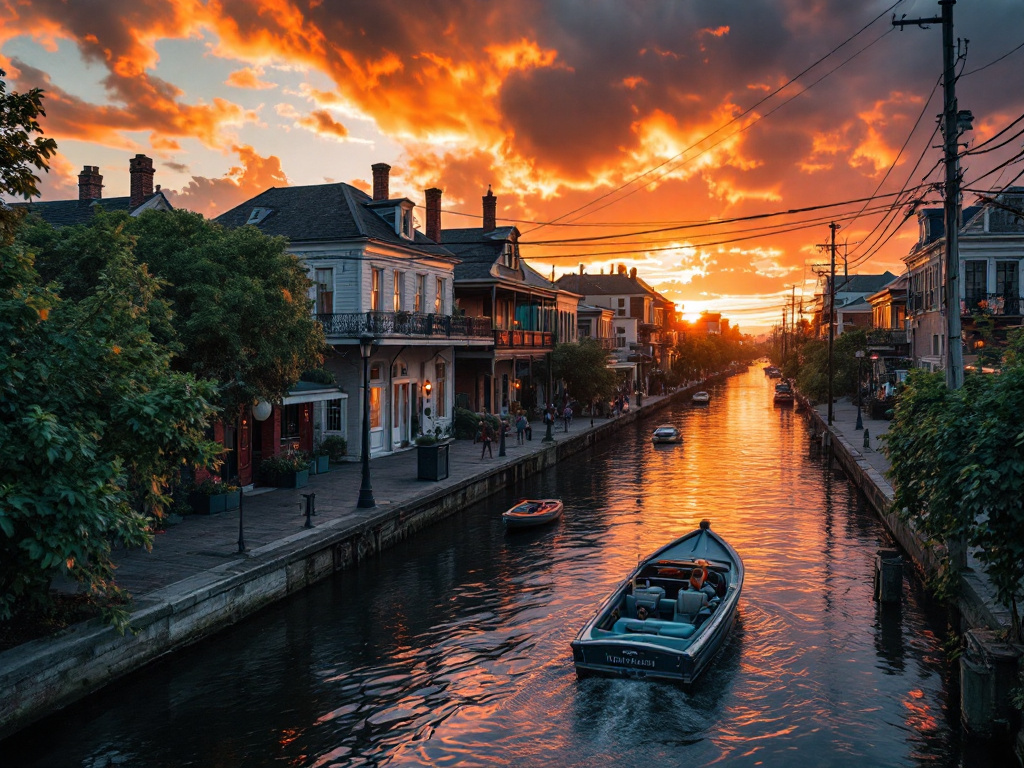
Visually, this is one of the most distinctive corners of American urbanism: rows of Creole cottages and shotgun houses painted in colors that would look garish anywhere else and look exactly right here, murals on side walls that change year to year, and a low, walkable scale that puts you at eye level with all of it. Crescent Park's steel Piety Street bridge frames the whole thing against the Mississippi at golden hour, industrial and unpretentious in a way that matches the neighborhood underneath it.
This trip suits travelers who'd rather have one good conversation with a bartender than check off five attractions, who want live music without a cover charge or a tour group, and who can handle humidity in exchange for a place with this much genuine texture. Go slow. New Orleans has never rewarded anyone in a hurry.
Want a personalized itinerary for this trip?
Sign up to get AI-generated day-by-day plans tailored to your preferences.
Plan Your Itinerary