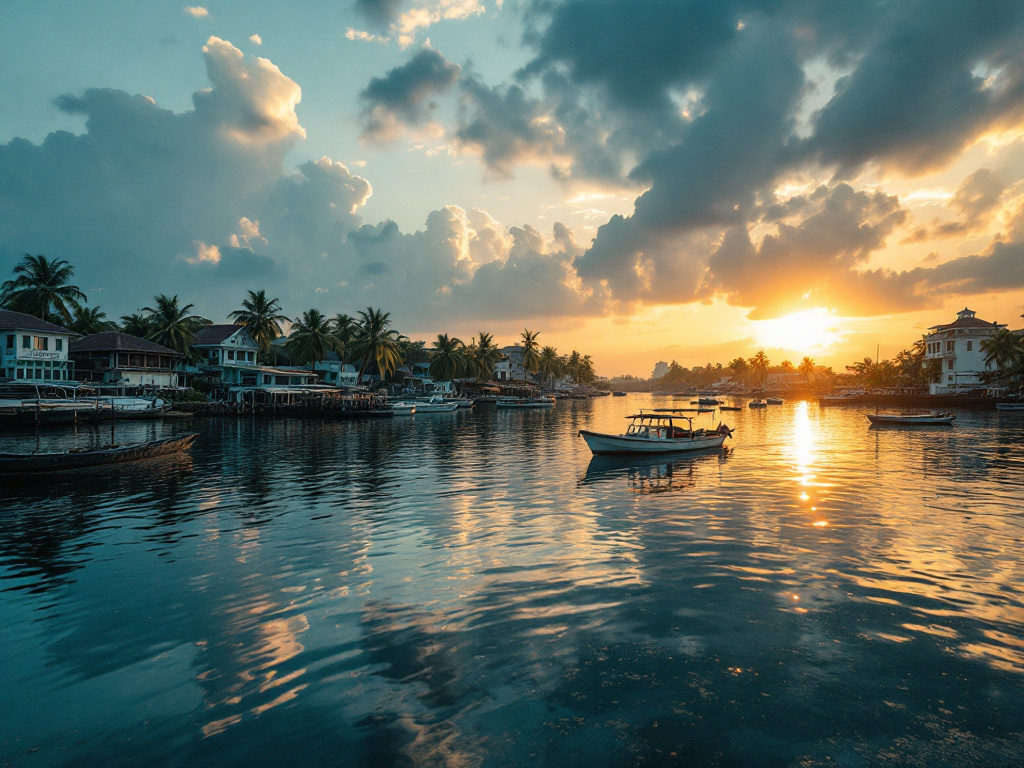
Fort Kochi Slow Days: Spice Warehouses, Fishing Nets & Biennale Galleries
A quiet coastal town where Portuguese, Dutch and British empires left their mark, reworked by artists into one of India's most compelling contemporary art scenes.
Highlights
- Chinese fishing nets at sunset along the Fort Kochi shoreline
- Kochi-Muziris Biennale galleries inside restored Dutch and British warehouses at Aspinwall House and Pepper House
- Spice-trading alleys and synagogue of Mattancherry's Jew Town
- Toddy shop lunch of Malabar fish curry and karimeen pollichathu
- Backwater day trip by houseboat from nearby Kumarakom
The Experience
Fort Kochi doesn't announce itself. You arrive by ferry across the harbor, past container ships waiting for berths, and step onto streets where four centuries of trade have left their residue in unmarked layers: a Portuguese church, a Dutch cemetery, a synagogue in a Jewish quarter that predates most of Europe's, warehouses stamped with British shipping company names now half-swallowed by banyan roots. Nothing here is staged for you. It just accumulated, and it's still accumulating.
The Chinese fishing nets are the postcard image, giant cantilevered contraptions worked by teams of fishermen along the shoreline at dusk, but the real texture of the place is in what surrounds them: tea shops where retired harbor pilots argue about football, spice godowns in Mattancherry still packing cardamom and pepper into burlap sacks for export, and a slow tidal rhythm that governs when the fish auctions happen and when the town goes quiet.
What makes Fort Kochi genuinely hip rather than just historic is what's happened to those empty warehouses since the Kochi-Muziris Biennale started using them. Aspinwall House and Pepper House, once spice and coir trading floors, now host serious contemporary art from across South Asia every two years, and even outside biennale season the galleries, artist residencies and independent bookshops that grew up around it have stuck around, tucked into buildings that still smell faintly of the cardamom they used to store.
Mattancherry's Jew Town is where the food gets serious: Malabar fish curry ladled over red rice at a toddy shop with no sign, karimeen pollichathu wrapped in banana leaf, and biryani joints that have been arguing about the correct ratio of ghee to rice for three generations. None of it is dressed up for tourists. You eat where the spice traders eat, at hours that suit them, not you.
This is a trip for people who like their history unrestored and their art scenes unpretentious, who'd rather spend an evening watching fishing nets rise and fall against the sunset than tick off a monument list. Kochi rewards slowness. Budget for a backwater day trip if the pace gets to you, but don't rush the town itself.
Want a personalized itinerary for this trip?
Sign up to get AI-generated day-by-day plans tailored to your preferences.
Plan Your Itinerary