Guanajuato: Tunnels, Troubadours & Technicolor Alleys
A hillside maze of candy-colored houses, underground tunnel roads and nightly troubadour processions in Mexico's most theatrical colonial city.
Highlights
- Callejoneada troubadour processions through candlelit alleys
- Museo de las Momias de Guanajuato
- Underground tunnel roads bored beneath the historic center
- Jardín de la Unión café and plaza life beside Teatro Juárez
- Diego Rivera's childhood home and early-works museum
- Enchiladas mineras and mezcalerías in former mining offices
The Experience
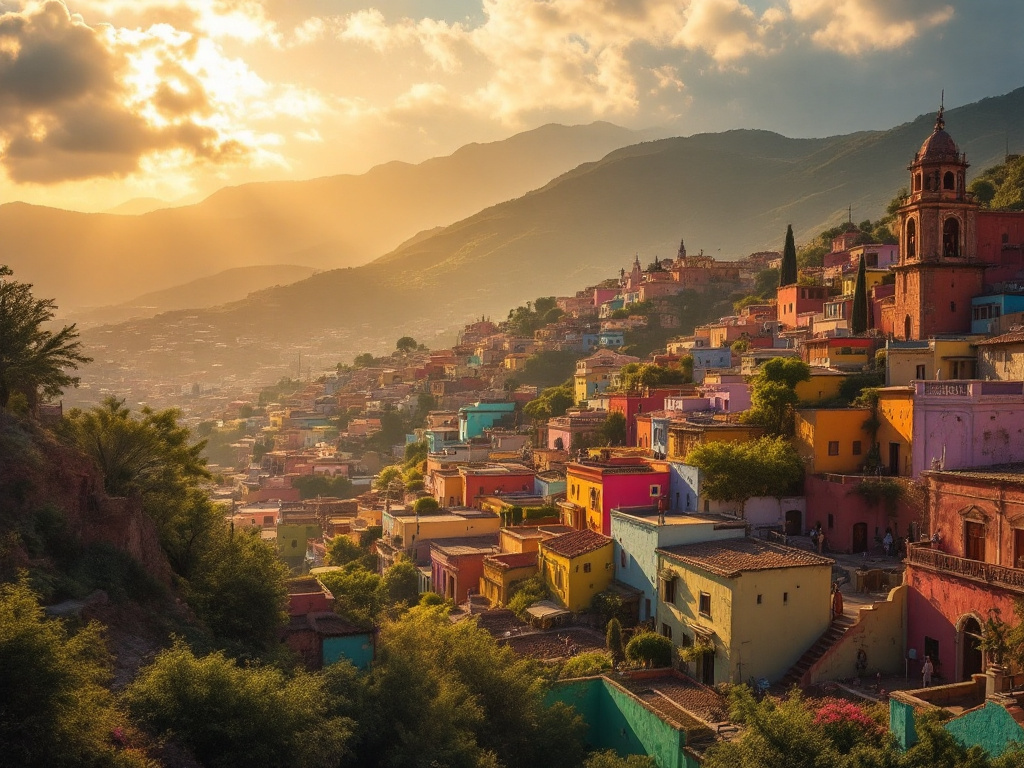
Guanajuato doesn't have streets so much as it has callejones: narrow, twisting alleys stacked up a ravine so steep that the city eventually gave up and routed its main roads through tunnels bored into the old riverbed underneath everything. Cars disappear into the earth and reemerge blocks away. Above ground, the houses stack in impossible shades of ochre, cobalt and rose up hillsides too steep to build on anywhere sensible, which is exactly why this former silver-mining capital never turned into a flat, predictable grid. You navigate by instinct and by staircase, which is half the fun.
After dark the city puts on a show it has been rehearsing since the 1960s: the callejoneada, a walking parade led by an estudiantina, a troupe in Renaissance costume playing guitars, mandolins and tamborines, pulling a growing crowd of visitors and locals through the alleys with wine gourds passed hand to hand. They stop at Callejón del Beso, the Alley of the Kiss, barely wide enough for two people to touch balconies across it, and tell the doomed-lovers legend attached to it with more comic timing than tragedy. It's touristy in the way a hometown parade is touristy: the tourists showing up doesn't make it less real, and plenty of guanajuatenses tag along for the free show.
This is fundamentally a college town, home to the University of Guanajuato's law and arts faculties, and it eats and drinks like one: cheap, inventive, and unpretentious. Enchiladas mineras, a local specialty topped with potatoes and carrots and named for the miners who needed the calories, show up on menus from market stalls to sit-down comedores. Mezcalerías tucked into former mining offices pour regional mezcal from Dolores Hidalgo alongside sotol and raicilla you won't find in Mexico City. The Jardín de la Unión, a triangular plaza wedged between the Templo de San Diego and Teatro Juárez, fills every evening with mariachi competing gently with student buskers, and nobody seems to mind sharing the soundtrack.
Guanajuato's museums lean unapologetically strange. The Museo de las Momias houses dozens of naturally mummified bodies, disinterred in the 19th century when a burial tax lapsed and families couldn't pay to keep relatives underground, preserved bone-dry by the region's mineral-rich soil. It's macabre, a little carnival-barker in its presentation, and completely unlike any museum experience elsewhere in the country. A gentler counterpoint sits a few blocks away: Diego Rivera's childhood home, now a museum tracing the muralist's early sketches before Mexico City and Paris entered the picture. Every October the whole city turns into a stage for the Festival Internacional Cervantino, drawing theater, dance and music companies from around the world into plazas that were built for exactly this kind of spontaneous performance.
Guanajuato suits travelers who want the postcard colors of San Miguel de Allende without the expat-retiree pricing, who don't mind climbing stairs to earn a view, and who'd rather stumble into a torch-lit alley parade than book a table at a restaurant with a laminated menu. Come with good shoes and no fixed plans after dark.
Want a personalized itinerary for this trip?
Sign up to get AI-generated day-by-day plans tailored to your preferences.
Plan Your Itinerary