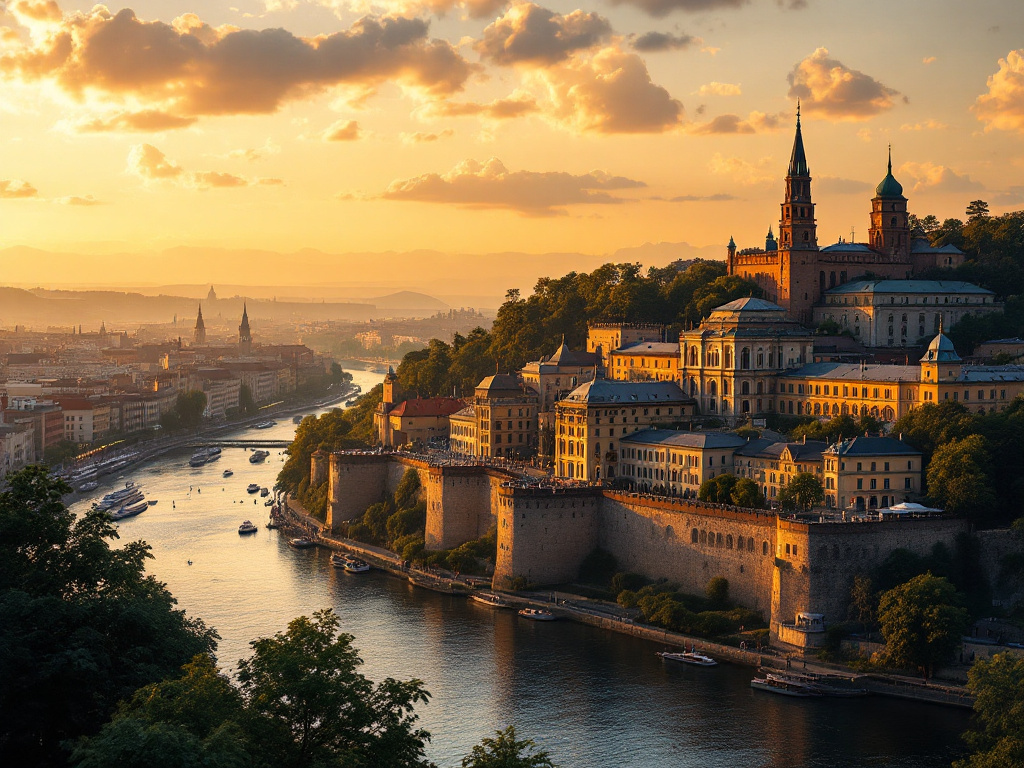
Novi Sad: Fortress, Festival & the Danube Below
A compact Serbian city with a Habsburg fortress above the Danube, legendary cafe culture on an Art Nouveau pedestrian strip, and the EXIT Festival turning its ramparts into Europe's wildest music stage every July.
Highlights
- Sunrise over the Danube from Petrovaradin Fortress
- EXIT Festival turning the fortress ramparts into Europe's best music venue every July
- Kafana hopping through unrenovated Serbian taverns with rakija and live folk music
- Morning espresso on Zmaj Jovina Street watching the Art Nouveau city wake up
- Afternoon swim at Štrand, Europe's largest river beach
The Experience
Novi Sad earns its reputation for cafe culture before you've found your hotel. The pedestrian stretch of Zmaj Jovina Street moves at the pace of a long espresso — umbrellas out even in late morning, locals doing the ritual double-kiss greeting, a row of Art Nouveau storefronts that feel borrowed from Vienna but have been here since before Vienna was paying much attention. Serbia's second city carries itself with the quiet confidence of a place that's been cosmopolitan for centuries without needing to advertise it.
The fortress is the reason people stay longer than they planned. Petrovaradin sits on a cliff above the Danube and has been there in various forms since the Romans came through; the current iteration is an 18th-century Habsburg construction that took 88 years to build. For 360 days a year it's a gallery complex, a restaurant zone, and the best sunrise point in the country. For four days in July it becomes EXIT Festival — widely considered Europe's best music festival, with a program that runs 24 hours across stages carved into old gunpowder chambers and ramparts. The combination of that setting and that lineup, in a city that still doesn't have the tourist infrastructure to overrun it, shouldn't be possible. But it is.
Vojvodina, the autonomous province Novi Sad anchors, was shaped by 16 different ethnic groups over several centuries, and the food tells that story honestly. A meal starts with rakija — plum brandy, poured without ceremony — and moves through grilled meats, fresh langos from the Futoška Pijaca market, and spätzle dishes that reveal the Hungarian-German thread running through the region. The kafanas that haven't been renovated since the 1980s are often the best ones: rough wood paneling, folk music that arrives without warning, a menu the waiter recites from memory because it changes daily.
The Danube pull is real. Štrand, the river beach on the north side of the city, runs for over a kilometer and operates as the city's communal living room from May through September. Novi Sad doesn't really distinguish between a weekday afternoon and a weekend at Štrand — people bring food, cold beer in plastic cups, and stay until evening. The bars along the riverbank south of the fortress do the same thing with a slightly different soundtrack: DJ sets bleeding through open windows, cocktails mixed without a menu, regulars who've been occupying the same table since the bar opened.
This is a city to add to the Balkans itinerary before enough people do that the kafanas start offering cocktail menus and the fortress gets ticketed at peak hours. It hasn't happened yet.
Want a personalized itinerary for this trip?
Sign up to get AI-generated day-by-day plans tailored to your preferences.
Plan Your Itinerary