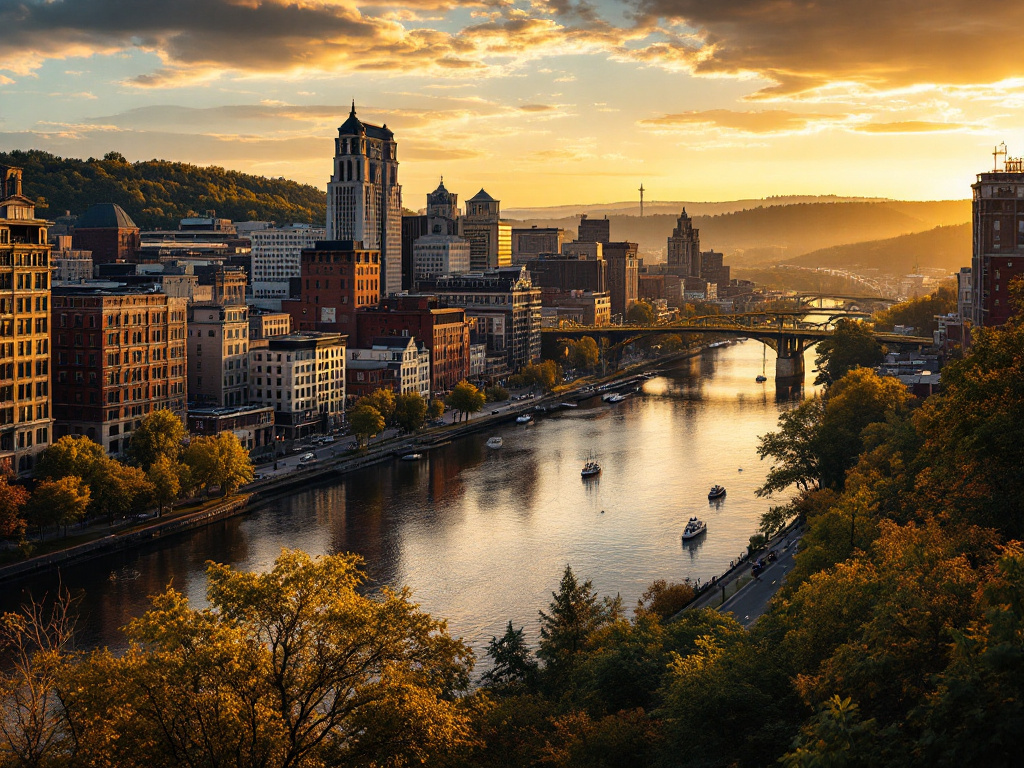
Pittsburgh Reinvented: Lawrenceville, Bloomfield & the Strip District
Steel City's old mill neighborhoods turned into Pittsburgh's most interesting corridor of natural wine bars, Polish delis, folk-art houses and Little Italy bakeries.
Highlights
- Butler Street corridor in Lawrenceville
- Pennsylvania Macaroni Co. and the Strip District produce market
- Randyland folk-art house in the Mexican War Streets
- Bloomfield's Little Italy trattorias and bakeries
- Mattress Factory contemporary art museum
- Duquesne Incline sunset over the rivers
The Experience
Pittsburgh spent a century being defined by the mills that no longer exist. What's left in their place isn't a museum piece, it's a working city that reused its own bones: hillside rowhouses, brick warehouses, church spires over neighborhoods that never emptied out the way people expected. Skip downtown's Golden Triangle and the tour-bus version of the city, and you land somewhere stranger and better, a run of neighborhoods along the rivers where steelworkers' grandchildren, art students and new immigrants all share the same few blocks.
Lawrenceville is the clearest example. Butler Street runs for two miles through what used to be the Allegheny Arsenal district, and it's now a strip of natural wine bars next to tattoo shops next to a hardware store that's been open since 1947. The old munitions row houses got bought up cheap in the 2000s by artists who couldn't afford anywhere else, and the neighborhood still has that scrappy, unfinished energy even as the restaurants have gotten serious. Nobody here is performing for visitors. It's a neighborhood that happens to have great food.
Down the hill, the Strip District is Pittsburgh's actual working market, not a recreation of one. Wholesale produce warehouses share the block with Polish delis, Middle Eastern grocers and an Italian macaroni company that's been hand-cutting pasta since 1902. On Saturday mornings it fills with people doing their actual grocery shopping, elbow to elbow with a coffee cart and a guy selling pierogi out of a folding table. It's loud, unglamorous and completely real, which is exactly the point.
Bloomfield, Pittsburgh's official Little Italy, sits a short walk from Lawrenceville but feels like a different decade. Family-run trattorias and Italian bakeries that have passed through three generations of the same last name still anchor Liberty Avenue, even as younger renters move into the apartments above them. There's no pretense of authenticity here because nobody had to manufacture it. The espresso is strong, the parking is terrible, and the neighborhood festival still shuts down the street every summer exactly like it did fifty years ago.
This is a trip for people who'd rather eat where a city actually eats than photograph a skyline. It suits travelers who like their culture unpolished, their bars unpretentious and their museums housed in a converted warehouse instead of a marble building. Ride the century-old Duquesne Incline up to Mount Washington at sunset for the one postcard moment, then head straight back down into the neighborhoods, because that's where the trip actually happens.
Want a personalized itinerary for this trip?
Sign up to get AI-generated day-by-day plans tailored to your preferences.
Plan Your Itinerary