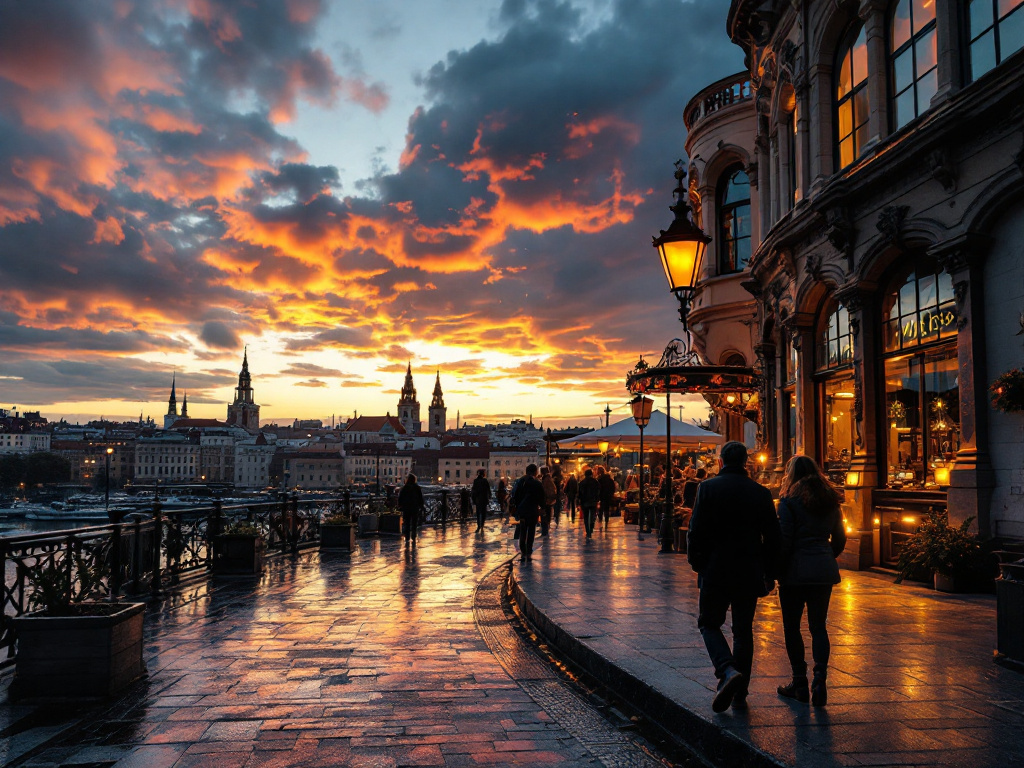
Riga After Hours: Art Nouveau Facades, Market Hangars & Craft Cocktails
A long weekend in Riga's Art Nouveau quarter and Zeppelin-hangar Central Market, tracing the city's swing from ornate 1900s facades to its scrappy, design-forward bar and coffee scene.
Highlights
- Self-guided Art Nouveau walk down Alberta and Elizabetes iela
- Riga Central Market inside the converted zeppelin hangars
- Miera iela's coffee roasters, natural wine bar and design shops
- Saturday farmers market at Kalnciema Quarter
- Craft beer bar crawl through the Old Town's back streets
- Unmarked speakeasy-style cocktail bars
The Experience
Riga plays a trick on first-time visitors: it lets them assume the medieval old town, all cobblestones and church spires, is the whole story, then sends them ten minutes north into Alberta iela and Elizabetes iela, where entire streets are covered in the wildest Art Nouveau facades in Europe. Sculpted faces peer down from third-floor windows, peacocks and sphinxes wrap around doorways, and roughly a third of the city's buildings turn out to be part of one of the largest concentrations of this style anywhere on the continent. Riga was rich a hundred years ago, and it built like it. Then it wasn't, for a long time, and a lot of that came close to being lost. It wasn't, and now it's the reason architecture people fly here specifically.
The Central Market does something similar to expectations. Five former World War I zeppelin hangars, repurposed in the 1930s to sell pork, pickles and river fish, still do exactly that, at a scale that makes most European market halls look like corner shops. Walk through the meat hangar and the dairy hangar back to back and you get a better sense of Latvian food culture in twenty minutes than a week of restaurant menus would give you. The smoked fish alone, sold by women who've been running the same stall for decades, is worth the detour.
What's newer, and what makes Riga worth a dedicated trip rather than a Baltic day-stop, is what's happened around the edges. Miera iela, a formerly industrial street on the way to nowhere in particular, has become the city's actual creative strip: small-batch coffee roasters, a skate shop, a natural wine bar, and a design studio or two, all inside converted Soviet-era buildings that nobody's bothered to over-renovate. Kalnciema Quarter runs a Saturday farmers market inside a cluster of restored wooden houses that could double as a folk museum, except everything's for sale and half of it's fermented. And Riga's bar scene, largely under the radar outside serious drinks circles, runs from precise cocktail bars hidden behind unmarked doors to a genuinely excellent home-grown craft beer movement that took off hard once Latvians realized they didn't need to import everything.
This suits travelers who like a city that rewards walking without a fixed plan, who want their architecture and their drinking both to be a little obsessive, and who'd rather find a wooden-house market than a souvenir strip. Riga is compact enough to cover on foot in three or four days and unpretentious enough that you won't need to dress for it. Go in late spring or early autumn, when the Art Nouveau district's window boxes and the market's produce stalls are both doing their best work.
Want a personalized itinerary for this trip?
Sign up to get AI-generated day-by-day plans tailored to your preferences.
Plan Your Itinerary