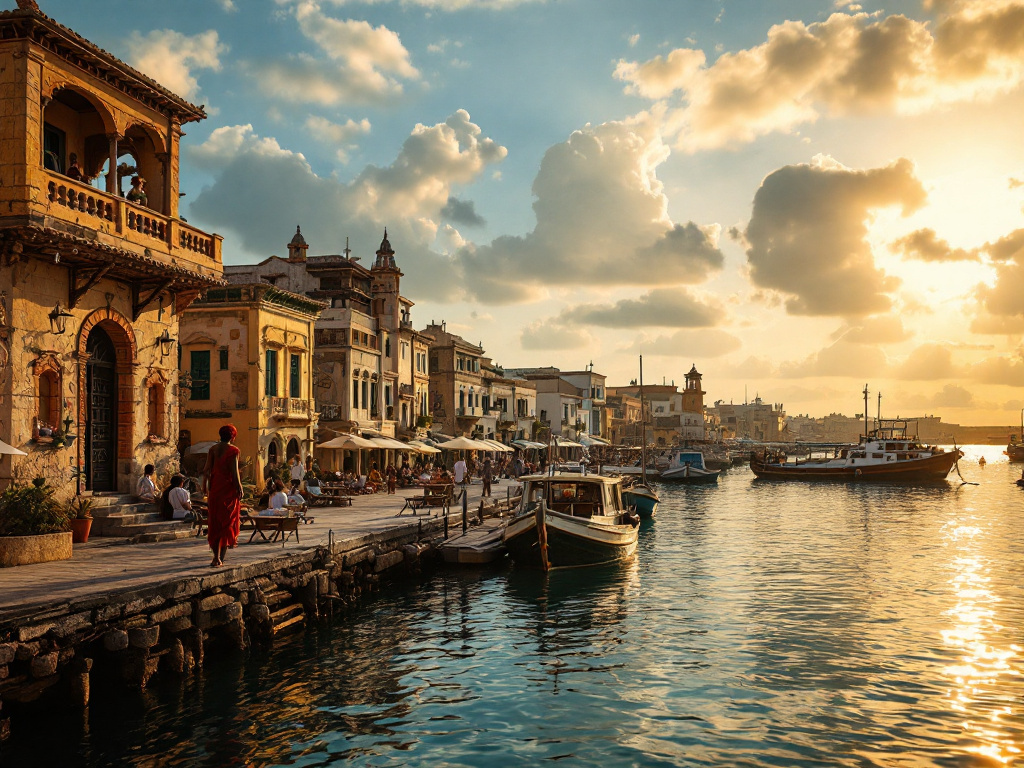
Stone Town Unlocked: Spice Alleys, Dhow Sails and Rooftop Sundowners
A coral-stone maze of Swahili, Arab and Indian architecture on Zanzibar's harbor, where night-market grills, sunset dhow sails and taarab music still run on local time.
Highlights
- Forodhani Gardens night food market and Zanzibar pizza grills
- Freddie Mercury's childhood home
- Sunset dhow sailing charter off Stone Town harbor
- House of Wonders and the Old Fort's taarab music nights
- Anglican Cathedral built on the former slave market site
- Darajani Market spice stalls and Swahili alleyways
The Experience
Stone Town is built from coral rag and time. Ships have been putting in here since the Sultanate ruled from Oman, and every wave of arrival, Swahili, Arab, Persian, Indian, European, left its mark on the same few blocks of tangled lanes. Walk in any direction and you lose your bearings on purpose: carved wooden doors studded with brass spikes, balconies close enough to touch across the street, cats sleeping in doorways, the smell of frying cassava chips mixing with cardamom from someone's kitchen. It is the only functioning historic town in East Africa built almost entirely from coral stone, and UNESCO listed it for exactly that reason. Locals still call it Mji Mkongwe, the old town, and they still live in it. This is not a museum piece kept behind glass.
The island's history sits close to the surface here, not tucked into plaques. The Anglican cathedral stands on the site of the old slave market, and the altar marks the spot where the whipping post once stood, a deliberate act of memory that most visitors find more affecting than any museum wing. A short walk away, the House of Wonders, once the tallest building in East Africa and the first with electricity and an elevator, testifies to the wealth clove exports once brought the sultans. Freddie Mercury was born a few streets over, and the modest house where he spent his early childhood, now a small unofficial shrine covered in fan graffiti, draws a steady trickle of pilgrims who came for the music and stayed for the town.
Zanzibar earned the nickname Spice Island honestly, and Stone Town is where that trade still shows up on a plate. Darajani Market runs loud and fast every morning, stalls of cloves, nutmeg, cardamom and vanilla stacked beside octopus fresh off the boats and mountains of King's mangoes in season. At dusk the whole town migrates to Forodhani Gardens, a waterfront strip where charcoal grills turn out Zanzibar pizza, a stuffed, folded street food that owes nothing to Italy, alongside skewers of kingfish and prawns and sugarcane juice pressed to order. It is the best cheap dinner in East Africa and also the best people watching, families and fishermen and backpackers sharing the same plastic tables.
When the market stalls close, Stone Town tips gently toward its rooftops. Bars set into converted merchant houses catch the last light over the harbor while dhows, the same lateen sail boats that have worked this coast for a thousand years, cut across the water on sunset charters. The Old Fort behind the House of Wonders hosts live taarab music and open-air film screenings some nights, a slow-strummed, Arabic-inflected sound that is as much Zanzibar's signature as the spice trade. None of it feels staged for tourists. The bars are half full of Zanzibaris, and the music was playing long before anyone thought to charge admission.
Stone Town suits travelers who want their beach time earned rather than default, the kind of trip where you spend two or three days getting lost in alleys and eating off charcoal grills before catching a taxi boat out to Prison Island or the white sand at Nungwi. It rewards curiosity over itinerary. Skip it if you only want a resort. Come for it if you want a town with real layers, still lived in, still trading spices the way it has for five hundred years.
Want a personalized itinerary for this trip?
Sign up to get AI-generated day-by-day plans tailored to your preferences.
Plan Your Itinerary