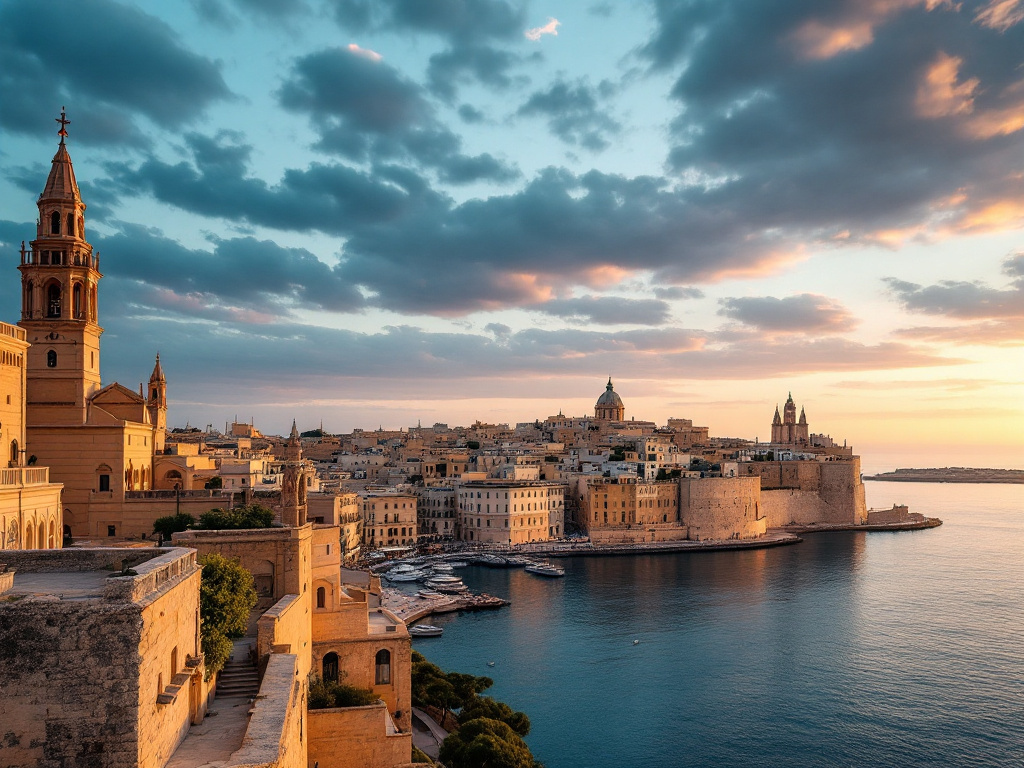
Valletta: Grand Masters, Caravaggio & the Smallest Capital in Europe
A walled city the size of a neighborhood that holds Caravaggio masterpieces, Baroque palaces, and one of the Mediterranean's most exciting food scenes — all in fifteen walkable minutes.
Highlights
- Caravaggio's The Beheading of Saint John the Baptist at St. John's Co-Cathedral
- Pastizzi and dark coffee at a corner bar on Republic Street
- Sunday fish market at Marsaxlokk fishing village
- Strait Street nightlife in the old naval Red Light District
- Ferry crossing to Sliema for the best skyline view of the city
The Experience
Valletta is one of those places that makes you recalibrate your sense of what a capital city is supposed to be. The entire walled city is smaller than Central Park — you can walk from one end to the other in fifteen minutes — yet somehow it contains Baroque palaces, the most important Caravaggio painting still in the place it was made, and the Grand Master's Palace where the Knights of St. John once governed a Mediterranean empire. Everywhere you walk, the limestone catches the afternoon light and glows amber, warm and ancient at once. The bastions drop sheer to the harbor below, and across the water Grand Harbour sits framed in a way that makes you understand why the Knights chose this peninsula in the first place.
The Maltese have been eating well for centuries without much notice from the wider world, and that suits them fine. Start every morning with pastizzi — diamond-shaped pastry parcels filled with ricotta or mushy peas, still warm from bakers who've been at it since before dawn — at a corner bar where coffee comes strong and sweet and the conversation is never in a language you understand. Lunch means ftira at a traditional bakery: the Maltese version of a filled focaccia pressed onto sesame-crusted sourdough. By evening, rabbit cooked slow in white wine with garlic and herbs (fenek, as it's known here) has been on the Maltese table since the Knights brought the habit of raising hutch rabbits on their ships centuries ago.
You could spend two hours inside St. John's Co-Cathedral and still feel you haven't fully seen it. The floor is made entirely of polychrome marble tombstones of the Knights, each one a different heraldic composition, and the walls are hung with Flemish tapestries woven from designs by Rubens. Then, in a side oratory behind a door that feels almost accidental, hangs Caravaggio's The Beheading of Saint John the Baptist — the only painting he ever signed, and he signed it in the blood pooling beneath the fallen figure. He was in Malta fleeing a murder charge in Rome, sheltering under the Knights' protection, and he painted like his freedom depended on it, because it did. It remains one of the most overwhelming works of art you can stand in front of in Europe, and you will not be fighting a crowd to do it.
Strait Street runs through the heart of the old city and has been through several lives — it was the red-light district serving British naval sailors for over a century, then abandoned for decades, and now it's Valletta's bar strip: narrow and loud on weekend nights with jazz drifting out of one doorway and natural wine being poured at the next. The city rewards people who want to understand a place through its food and architecture and the specific quality of light hitting a harbor at dusk, rather than through a checklist. Come in spring or autumn when the heat is gentle and the limestone glows instead of blazes, and give yourself at least three days to stop feeling rushed.
Want a personalized itinerary for this trip?
Sign up to get AI-generated day-by-day plans tailored to your preferences.
Plan Your Itinerary