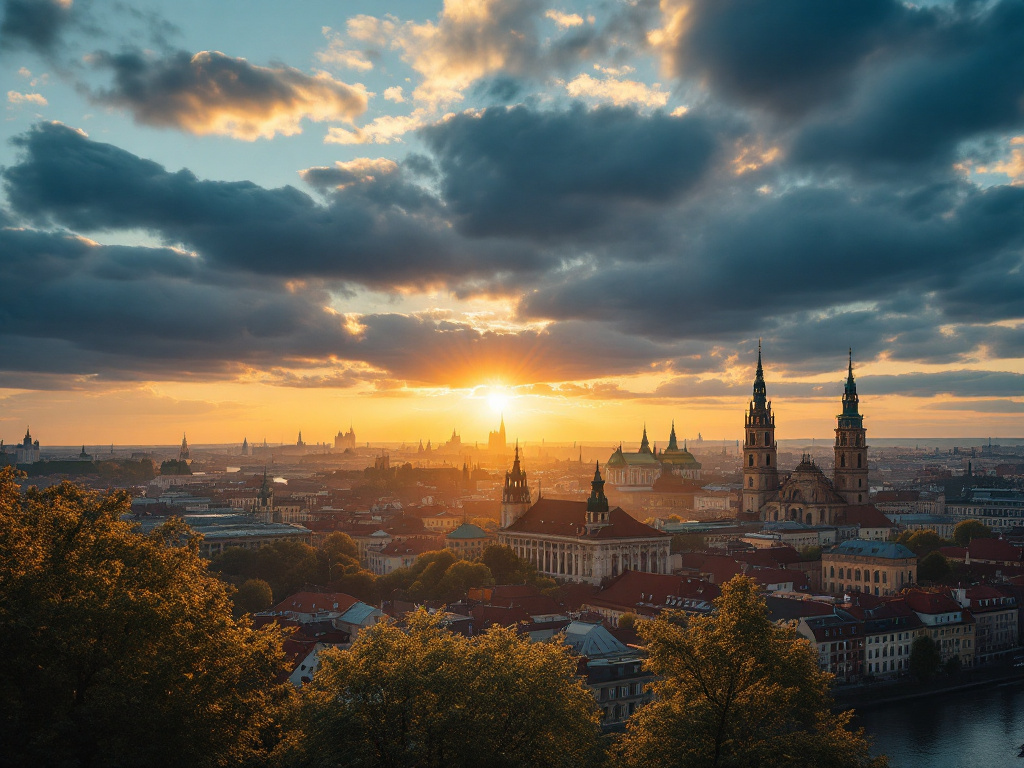
Vilnius: Europe's Secret Baroque City and an Artists' Republic That Declared Itself Hip
Three days in Lithuania's capital — a UNESCO Old Town, a neighborhood that declared independence, and a coffee scene so serious it makes Copenhagen nervous.
Highlights
- Crossing into Užupis on a Sunday to read the artists' republic constitution on the mirrored wall
- Specialty espresso at a roaster where the barista has strong opinions about Ethiopian naturals
- Medieval cellar wine bar in the Old Town after dark
- The Gothic brick facade of St. Anne's Church — the one Napoleon wanted to take to Paris
- Cepelinai potato dumplings with smoked bacon and sour cream at a proper Lithuanian table
The Experience
Vilnius exists in a category of its own: a UNESCO-listed baroque city that most travelers treat as a stopover on the way to Riga or Tallinn, yet those who linger for three days tend to rebook the return flight. The Old Town is one of Europe's largest and least-touched medieval centers, a maze of amber-lit cobblestones, candy-colored facades, and churches stacked on churches across five centuries. It does not feel like a museum because it isn't one. The restaurants inside those baroque shells are genuinely good, the bars stay open late, and the coffee is taken seriously by people who have strong opinions about fermentation and origin.
The neighborhood that separates Vilnius from every other compact European city break is Užupis, a small artists' quarter across the Vilnia River that formally declared independence in 1997. Technically a provocation, practically a real place: it has a president, a constitution translated into dozens of languages and etched onto mirrored panels on the wall, and an April Fools' Day border crossing where guards stamp passports. More than the theater, Užupis is genuinely lived-in. Studios above galleries above natural wine cellars, muralists working in the open, cats napping in doorways. It is the kind of place that would have ruined itself if mainstream tourism had found it, but somehow it hasn't.
Vilnius rewards slow mornings. The specialty coffee scene is remarkable for a city this size: roasters with real opinions about processing, espresso bars that feel like they emerged from Scandinavia and kept all the warmth. Afternoons are best spent drifting through the Pilies Street antique market, climbing to the ruins of Gediminas Tower for the view, or sitting inside St. Anne's Church, the late-Gothic brick facade that Napoleon supposedly wanted to carry back to Paris in his palm. Evenings settle naturally into medieval cellar bars pouring orange wine and smoked fish snacks, or long dinners where Lithuanian cuisine finally gets treated with the respect it always deserved.
The city is affordable in a way that feels almost accidental. The same streets, the same quality of coffee and wine and food, placed in Western Europe, would cost three times as much. It is also small enough to walk nearly everywhere: your hotel to the cathedral square, through the gates of the Old Town, across the bridge into Užupis, back through the gates at midnight. In summer the sky stays light until nearly eleven and the terrace bars fill with locals who look like they are in a film set that also happens to be their actual neighborhood. In December the Christmas market wraps the cathedral square in amber and mulled wine and smoked sausage and the whole city smells like pine and woodsmoke. Either way, Vilnius rewards the traveler who chose it on purpose.
Want a personalized itinerary for this trip?
Sign up to get AI-generated day-by-day plans tailored to your preferences.
Plan Your Itinerary